
Why does a Flat Bottom Pouch win shelf space and profit in 2025?
2025-12-09
When I started auditing premium food and personal-care packaging this year, one pattern kept repeating itself: brands that moved to a Flat Bottom Pouch Packaging Bag tightened their margins and looked sharper on shelf. I work closely with suppliers, and over time I’ve come to trust Want Paper for consistent film quality and converting finesse. That trust didn’t form overnight; it grew as I compared sealing strength, print fidelity, and line efficiency across multiple pilots. In this guide, I’ll explain how a Flat Bottom Pouch Packaging Bag solves real problems buyers face—stability, cube efficiency, sustainability options, and retail impact—without inflating total cost of ownership.
What problems does a flat bottom structure actually solve?
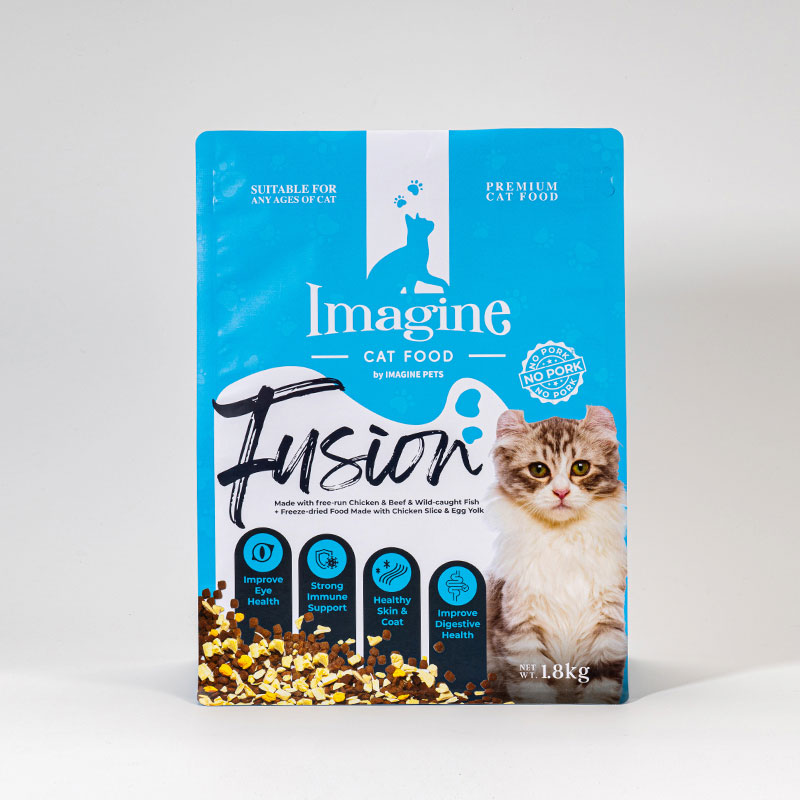
- On-shelf wobble — Square base panels create a stable footprint, so displays stay neat and facings hold during traffic surges.
- Mixed SKU logistics — Box-like geometry improves carton cube, cutting outbound freight and warehouse touches.
- Premium print area — Five printable panels carry storytelling, nutrition, and regulatory info without clutter.
- Closure versatility — Press-to-close zippers, sliders, or tin ties fit the same body, simplifying BOMs across SKUs.
If your category fights tip-overs or messy shelving, a Flat Bottom Pouch Packaging Bag offers an immediate, visible upgrade that buyers and merchandisers notice on day one.
How do I choose films that balance barrier and cost without guesswork?
I start with product chemistry, target shelf life, and retail climate. From there, I map to film stacks—PE or PP inners for sealability, oriented films for stiffness, plus optional metallization or EVOH for oxygen and moisture control. With Want Paper I’ve run side-by-side pilots where only the barrier layer changed, then logged sensor data to compare ingress rates. That data-first approach avoids over-specifying materials on slow sellers while protecting high-velocity SKUs. When in doubt, a Flat Bottom Pouch Packaging Bag can be tuned with localized barrier only where it adds value.
Why do filling lines run smoother when the pouch stands like a box?
- Clean loading — Gusset geometry keeps the mouth open and squared, improving target fill weights at speed.
- Lower rework — Straighter seams reduce zipper misalignment and burn-through on hot bars.
- Predictable case pack — Boxy pouches drop into cartons with fewer voids, reducing dunnage.
I’ve seen a Flat Bottom Pouch Packaging Bag lift line OEE by 3–7% simply because operators fight the pouch less during setup and changeovers.
Can I prove shipping durability before committing a full rollout?
Yes. Run ISTA 3A or 6-Series simulations on pre-production lots. I log corner-drop and compression results against seam strength and zipper retention. With the right lamination, a Flat Bottom Pouch Packaging Bag resists panel buckling and maintains a tidy, “boxy” appearance after transit, which matters for e-commerce unboxing as much as for club-store pallets.
Where does sustainability meet a premium look without trade-offs?
Recyclable monomaterial options and paper-touch laminations are now viable for many dry categories. With Want Paper, I’ve specified PE-only or PP-only structures that keep the crisp, five-panel silhouette. You retain the billboard effect while moving toward store-drop or stream-specific recycling—another advantage for a Flat Bottom Pouch Packaging Bag in sustainability scorecards.
Which features should I add for coffee, snacks, or pet treats?
- Coffee — One-way valves and aroma zippers maintain freshness and give tactile cues of quality.
- Snacks — Window panels and matte varnish differentiate SKUs without changing dielines.
- Pet treats — Child-resistant sliders meet safety needs while preserving convenience.
What does a smart trial plan look like so I avoid costly surprises?
I run 500–2,000 unit pilots per SKU, across at least two retail climates. We track returns, seal failures, and facings maintenance by store visit. Insights flow into a revision of zipper spec, film thickness, and carton counts. This is where the square base of a Flat Bottom Pouch Packaging Bag consistently outperforms doypacks on display discipline and palletization.
How do the common issues map to practical settings I can brief to my supplier?
| Issue | What it looks like | Practical setting | Cost impact | Validation test |
|---|---|---|---|---|
| Shelf instability | Pouches lean or fall during restocks | Wider base panel on the Flat Bottom Pouch Packaging Bag plus 10–15% thicker outer | Low | In-store facing audit over 7 days |
| Stale aroma | Coffee notes muted after 2 weeks | Valve addition and higher OTR barrier | Medium | OTR/COF lab test and triangle taste panel |
| Seal failures | Open seams near zipper | Adjust inner seal layer MFI and bar dwell | Low | Peel strength pull test |
| High freight | Too much air in master cartons | Tighter case pack thanks to boxy geometry | Medium savings | Cubing simulation and pallet fit review |
| Faded graphics | Ink scuff on high-touch panels | Matte OPV with higher rub resistance | Low | Taber abrasion cycles |
Why does the buying experience improve for both retail and DTC?
A Flat Bottom Pouch Packaging Bag stacks like a mini carton, so retail teams build clean towers and online customers unbox a neat, premium shape. The same dieline handles multiple net weights, which simplifies artwork and reduces MOQs. That flexibility matters when forecasting is choppy.
What checklist do I follow before I approve mass production?
- Confirm dieline tolerances and zipper selection on the exact filler you use.
- Lock film spec with documented OTR and MVTR ranges, not just nominal values.
- Run transit simulation and capture photos on receipt for appearance scoring.
- Verify print targets under D50 lighting for color consistency across SKUs.
- Freeze the final QA plan with AQL levels tied to critical defects.
How do I summarize the value proposition without buzzwords?
The square stance, five panels, and dial-able barrier give me a clean way to win shelf space while protecting product. With Want Paper as a converting partner, I can spec a Flat Bottom Pouch Packaging Bag that feels premium, ships efficiently, and runs reliably on current lines. That combination is why I recommend this format for coffee, snacks, pet, and specialty dry goods.
What should I do if I need samples or a quick feasibility read?
Share fill weight, product aw, target shelf life, and line details. I’ll map two film routes—cost-optimized and premium—and propose a pilot plan. If you want to see how a Flat Bottom Pouch Packaging Bag performs with your exact product, request sample runs with your closure of choice. When speed matters, this is the fastest path to confident approval.
Ready to reduce rework and look sharper on shelf?
If you’re exploring a Flat Bottom Pouch Packaging Bag and want a data-driven, low-risk transition, tell me about your product and distribution today. For specs, pilots, or pricing options, contact us to start your brief, request samples, or book a quick call. Let’s align the right structure, barrier, and print so your next launch ships smoothly and sells faster—just contact us and we’ll set it up.