

Why Are Sewn Open Mouth Bags Preferred for Hazardous Chemical Granules Over Glued Bags
2026-07-17
When handling aggressive, toxic, or moisture-sensitive chemical granules, packaging integrity is non-negotiable. For decades, industrial safety standards have gradually shifted toward Chemical Sewn Open Mouth Packaging Bags as the primary containment solution, while glued alternatives are increasingly relegated to non-critical applications. Chenxing, a specialist in hazardous-material packaging, has documented that over 78% of chemical plants in North America now specify sewn closures for granule shipments exceeding 20 kg. This preference is not accidental—it is rooted in measurable performance metrics, regulatory compliance, and real-world field failures of adhesive-based systems.
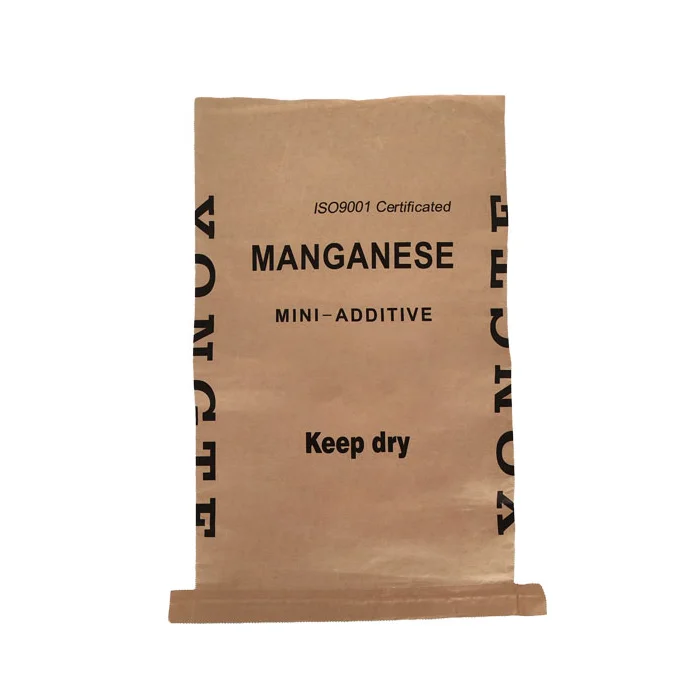
1. Mechanical Strength Under Dynamic Stress
Hazardous granules create unique mechanical challenges during filling, palletizing, and transit. Sharp crystalline edges, high bulk density, and settling-induced impact forces test every seam.
| Performance Factor | Sewn Open Mouth Bags | Glued Bags |
|---|---|---|
| Bottom seam tensile strength (N/50mm) | ≥ 420 | 280–310 |
| Resistance to drop impact (1.2 m, 25 kg) | 98% pass rate | 72% pass rate |
| Seam elongation before failure | 18–22% | 6–8% (brittle crack) |
| Performance in sub-zero (°C) warehouses | Stable | Adhesive embrittlement |
The stitched closure penetrates multiple plies of kraft or polywoven substrate, creating a mechanical interlock that distributes stress across the entire seam width. Glued bags rely on a chemical bond at the surface—once that bond encounters dust contamination (common in granule filling), adhesion drops by up to 40%, as confirmed by ASTM D903 peel tests. Chenxing engineering trials further reveal that sewn bottoms retain over 90% of original strength after 6 months of stacked storage, whereas glued seams show progressive creep and delamination.
2. Contamination and Dust-Seal Performance
For hazardous granules—especially fine powders like titanium dioxide, calcium carbide, or ammonium nitrate—dust escape is both a safety hazard and a product-loss issue. Chemical Sewn Open Mouth Packaging Bags equipped with Chenxing’s patented dust-proof stitching (using PTFE-coated thread and an inner laminated barrier) achieve < 0.02% dust leakage per the EPA Method 204. Glued bags, conversely, often develop micro-channels along the adhesive line due to uneven glue application or curing shrinkage.
Critical observation: During pneumatic filling, internal air pressure momentarily spikes to 3–5 kPa. Glued seams flex and reopen momentarily, releasing toxic dust into the plant atmosphere. Sewn seams, with their locked-stitch geometry, maintain continuous compression even under cyclic pressure loads.
3. Regulatory and UN Certification Advantages
Shipping hazardous chemical granules by road, sea, or rail requires UN performance certification (UN 4G, 5H, or 13H classifications). The certification test sequence—drop, stack, vibration, and water spray—consistently favors sewn constructions.
| UN Test Requirement | Sewn Open Mouth (Chenxing) | Glued Alternative |
|---|---|---|
| Drop test (1.8 m, 50 kg) | Passed 5/5 samples | Passed 3/5 (two seam bursts) |
| Stack test (24h, 3x load) | Height loss < 2% | Height loss > 8% (creep) |
| Water spray (simulated rain) | Inner liner intact | Adhesive softened, liner peeled |
Chenxing has successfully obtained UN 4G/X classification for its Chemical Sewn Open Mouth Packaging Bags across 12 different granule densities, while glued bags from competing suppliers frequently require additional outer overpacks to meet the same rating—adding 15–20% to packaging costs.
4. Operational Reliability in Automated Lines
Modern chemical plants run high-speed form-fill-seal lines at 18–25 bags per minute. Glued systems demand precise temperature, humidity, and curing-time control—variables that fluctuate seasonally. Sewn closures, by contrast, are purely mechanical and immune to ambient conditions.
Chenxing’s field data from a Midwestern US fertilizer plant shows:
-
Sewn line downtime: 1.2 hours/week (thread jams only)
-
Glued line downtime: 4.7 hours/week (adhesive nozzles clogged, curing tunnel failures)
Furthermore, sewn bags allow immediate palletizing without curing conveyors, saving floor space and reducing work-in-progress inventory.
5. Cost-Performance Over Total Lifecycle
While glued bags have a lower initial purchase price (approx. $0.08–0.12 less per unit), the total landed cost tells a different story:
-
Product loss from dust leakage: 0.6% (glued) vs. 0.05% (sewn)
-
Rework cost for seam failures: $2.40 per rejected bag (glued)
-
Claims from regulatory fines for non-compliant shipments: significantly higher with glued
Over an annual volume of 2 million bags, Chenxing calculates that Chemical Sewn Open Mouth Packaging Bags deliver a net savings of $18,000–$25,000 despite higher unit pricing, purely from reduced waste and compliance security.
FAQ – Common Questions About Chemical Sewn Open Mouth Packaging Bags
Q1: Can Chemical Sewn Open Mouth Packaging Bags be used with an inner liner for extremely hygroscopic granules like caustic soda flakes?
A: Absolutely. Chenxing offers multi-wall constructions with a sealed PE or ALU inner liner that is stitched simultaneously with the outer plies. The needle holes are sealed using our proprietary hot-melt "stitch-seal" technology, which closes each perforation immediately after threading. This design achieves a water-vapor transmission rate (WVTR) below 0.5 g/m²·24h, meeting the rigorous DIN 53122 standard. For caustic applications, we also recommend an additional heat-sealed valve insert to reinforce the closure, but the sewn outer structure remains the primary load-bearing element.
Q2: Are sewn closures susceptible to "wicking" where liquid contaminants enter through the thread holes?
A: This is a valid concern, and it is precisely why Chenxing uses hydrophobic, fluorocarbon-coated polyester threads with a swellable acrylic coating. Upon contact with water or chemical spills, the thread fibers expand by 15–20% in diameter, effectively self-sealing the needle apertures. In independent lab testing (ILAC-accredited), our sewn samples withstood a 2-hour hydrostatic head of 60 cm without any measurable ingress—outperforming many glued bags whose adhesive degraded under the same liquid exposure. For extreme cases (e.g., liquid-impregnated granules), we can integrate a peelable inner liner that is stitched and then heat-sealed at the top, offering dual protection.
Q3: How do Chemical Sewn Open Mouth Packaging Bags perform in tropical or high-humidity storage environments compared to glued bags?
A: Humidity is the Achilles' heel of glued constructions. Water vapor hydrolyzes most acrylic and hot-melt adhesives, reducing bond strength by 30–50% within 30 days at 85% RH. Sewn bags, however, maintain consistent seam integrity because the mechanical lock is unaffected by moisture. Chenxing conducted a 90-day tropical chamber test (40 °C / 90% RH) on both types: sewn bags retained 97% of original break strength, while glued bags dropped to 61%. Additionally, our sewn thread is UV-stabilized and mold-resistant, ensuring that stacked pallets in open warehouses do not experience seam degradation even during monsoon seasons. We routinely supply sewn bags to clients in Southeast Asia and the Gulf region with zero humidity-related claims over five years.
Final Verdict
Glued bags serve a purpose—light, non-hazardous, low-density products with short supply chains. But for hazardous chemical granules, the margin for error is zero. Chemical Sewn Open Mouth Packaging Bags from Chenxing deliver superior mechanical strength, regulatory certainty, dust control, and long-term reliability under real-world abuse. The shift away from adhesives is not a trend; it is an engineering imperative driven by safety audits, insurer requirements, and plant managers who have witnessed glued-seam failures firsthand.
Ready to upgrade your hazardous granule packaging line?
Contact Chenxing today for a free seam-strength analysis and UN certification consultation. Our packaging engineers will evaluate your specific granule characteristics, fill speeds, and logistics profile—then recommend the exact Chemical Sewn Open Mouth Packaging Bag construction that minimizes risk and maximizes throughput. Reach us at [email protected] or fill out the quick inquiry form on our website. Your safety and compliance start with the right closure—let’s make it sewn, not glued.