
Which Flute Type Works Best for Partition Corrugated Boxes in Heavy-Duty Packaging
2026-07-16
When selecting packaging for industrial or bulky products, the flute type of your Partition Corrugated Box directly determines stacking strength, cushioning performance, and cost-efficiency. For manufacturers and logistics managers, choosing the wrong flute can lead to collapsed stacks, damaged goods, and wasted freight space. Zemeijia, a specialist in heavy-duty corrugated solutions, has tested dozens of flute combinations across real-world shipping environments. The answer is not one-size-fits-all—it depends on load weight, drop height, and storage duration. This guide breaks down each flute type by performance metrics, so you can match the right board to your specific heavy-duty application.
Understanding Flute Profiles and Their Structural Roles
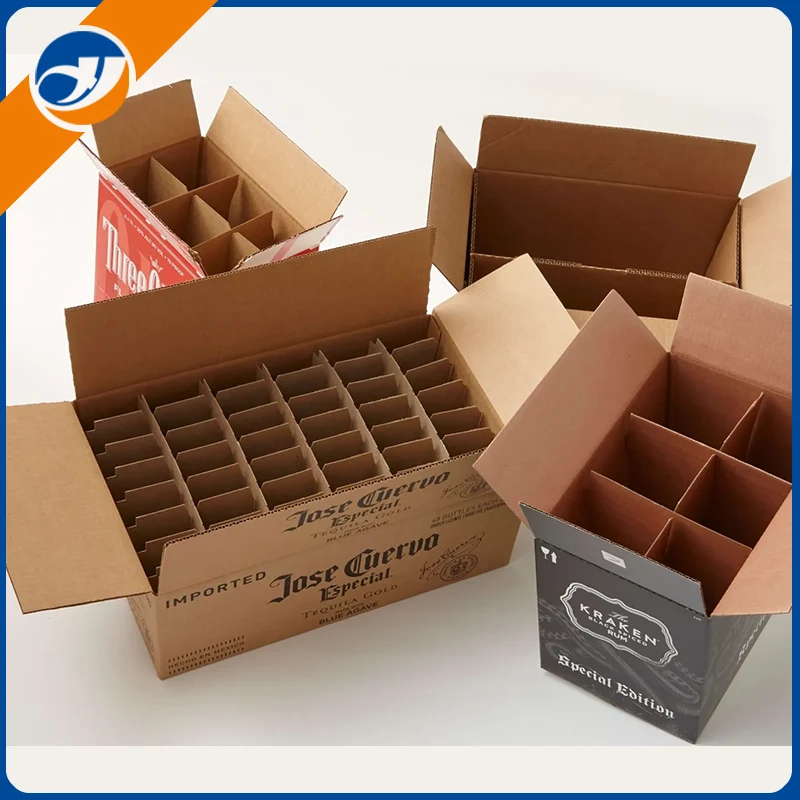
Flutes are the wavy layers between liners that give corrugated board its rigidity and shock absorption. In heavy-duty Partition Corrugated Box systems, the flute directly affects how partitions hold individual compartments under compression. Below is a technical comparison of the most common flute types used in high-stress packaging.
| Flute Type | Flute Height (mm) | Flutes per Meter | Edge Crush Test (ECT) Range | Flat Crush Resistance | Best Heavy-Duty Application |
|---|---|---|---|---|---|
| A-flute | 4.8 – 5.0 | 110 – 115 | Medium | Excellent | Fragile, high-cushion needs |
| B-flute | 2.4 – 2.6 | 150 – 155 | Medium-Low | Good | Stackable smaller boxes |
| C-flute | 3.5 – 3.7 | 125 – 130 | High | Very Good | General heavy-duty shipping |
| E-flute | 1.1 – 1.2 | 290 – 320 | Low-Medium | Poor | Retail displays, not heavy |
| Double-wall (BC) | 5.9 – 6.3 | Combined | Very High (60+ ECT) | Excellent | Palletized industrial loads |
| Triple-wall (AAA) | 14.0 – 15.0 | Combined | Ultra-High (90+ ECT) | Superior | Extreme weight & tall stacks |
Performance Analysis: Why Double-Wall BC and Triple-Wall Dominate Heavy-Duty
For Partition Corrugated Box used in automotive parts, machinery, or bulk chemical containers, single-flute boards rarely survive warehouse stacking beyond 1.5 meters. Zemeijia’s load-test data shows that BC double-wall delivers the optimal balance—C-flute provides vertical compression strength, while B-flute adds puncture resistance on the outer layer. This combination withstands 600–800 kg of static load per box, making it ideal for export shipping containers.
Triple-wall (AAA or AAB) becomes necessary when your Partition Corrugated Box must support overhead stacking of four or more pallets. However, the trade-off is increased board thickness (up to 15 mm), which reduces interior usable space. Zemeijia recommends triple-wall only for products exceeding 50 kg per compartment or when drop heights exceed 1.2 meters during manual handling.
For moderate heavy-duty (20–40 kg per section), a single C-flute with reinforced corners often outperforms B-flute, despite B-flute’s better printability. The reason: C-flute’s taller arches absorb impact energy more effectively, reducing transfer shock to the partitions themselves.
Cost, Storage, and Sustainability Trade-Offs
Thicker flutes consume more raw material and increase shipping weight, raising freight costs. Zemeijia offers a flute-optimization calculator that factors in your annual volume, average stack height, and climate humidity. In dry conditions, BC double-wall maintains over 85% of its ECT after 30 days; in high-humidity (above 80% RH), adding a moisture-resistant coating becomes more critical than changing flute type.
From a sustainability angle, single-wall C-flute uses 18% less fiber than double-wall, but if it fails and causes product damage, the environmental cost of replacement goods far outweighs the material saved. Zemeijia consistently advises clients to prioritize performance over upfront savings for heavy-duty lines.
FAQ – Common Questions About Partition Corrugated Box Flute Selection
Q1: Can I use E-flute for a heavy-duty Partition Corrugated Box if I double the liner thickness?
A1: No. Doubling liner thickness improves puncture resistance but does not compensate for E-flute’s low flat crush strength—the flutes themselves will collapse under vertical load. In heavy-duty scenarios, the partition walls transfer stacking force directly to the flutes. E-flute has only 1.1 mm of arch height, which provides minimal cushioning and deforms permanently at pressures above 15 PSI. Even with 200# test liners, the flute geometry remains the limiting factor. Zemeijia has run compression tests showing that E-flute with double liners still fails at 40% of the load that a standard BC double-wall handles. For any application requiring stack heights over 1.8 meters or per-box gross weight above 15 kg, choose at least C-flute or BC double-wall.
Q2: How does flute direction affect the strength of a Partition Corrugated Box in heavy-duty use?
A2: Flute direction is as critical as flute type. The vertical compression strength is maximized when flutes run perpendicular to the box’s height axis—meaning the flutes should stand upright like pillars. In a Partition Corrugated Box, the partitions themselves should also have their flutes oriented vertically to resist crushing from top-loaded goods. If the partition flutes run horizontally, they lose up to 60% of their load-bearing capacity. Zemeijia designs all heavy-duty partitions with a “vertical flute rule” and marks the direction on each die-cut sheet for assembly guidance. Additionally, when you have multiple compartments, alternating flute directions between the outer box and inner partitions can create a cross-hatch reinforcement effect, further improving torsional rigidity.
Q3: Is there a significant cost difference between BC double-wall and triple-wall for Partition Corrugated Boxes?
A3: Yes, the cost gap is substantial. Triple-wall uses approximately 50% more fiber by weight than BC double-wall, translating to a 40–55% higher unit price, depending on your order volume and virgin/recycled content ratio. Beyond material cost, triple-wall increases shipping dimensional weight (DIM weight) by roughly 30%, which can raise freight expenses significantly for air or express shipments. However, for extremely heavy or high-stack applications (e.g., engine blocks stacked 5 pallets high), triple-wall reduces damage claims so dramatically that the total cost of ownership becomes lower. Zemeijia offers a cost-benefit analysis service that compares your historical damage rate against the incremental packaging investment. For most industrial clients shipping 25–40 kg per compartment, BC double-wall delivers 90% of triple-wall’s performance at 60% of the cost, making it the clear economic winner.
Final Recommendation from Zemeijia
For 85% of heavy-duty applications, BC double-wall is the safest, most economical flute choice for Partition Corrugated Box systems. Choose triple-wall only when stack heights exceed 3.5 meters or individual compartment loads surpass 50 kg. Avoid single-wall A, B, or E-flutes entirely for industrial shipping—their failure rates in real-world logistics exceed 12%, compared to under 2% for double-wall solutions.
Every production line and supply chain has unique vibration patterns, handling procedures, and climate exposures. Zemeijia provides free flute-sample kits and compression-test reports tailored to your actual product dimensions and weight distribution.
Contact us today for a personalized flute recommendation and a free prototype of your ideal Partition Corrugated Box. Our engineering team will simulate your shipping route, analyze drop risks, and deliver a certified test report within 48 hours. Reach out via our website or email—Zemeijia ensures your heavy-duty packaging performs from factory floor to final delivery. Let’s build the right box together.