

When Should You Choose Emulsion-Bound Fiberglass Chopped Strand Mat Over Powder-Bound Chopped Strand Mat
2026-10-22
Selecting the right reinforcement directly affects laminate quality, production efficiency, and total cost. Emulsion-Bound Fiberglass Chopped Strand Mat is a wet-formed mat held together by an emulsion binder, and it is widely used in hand lay-up, filament winding, and continuous lamination. Yuruis supplies both emulsion-bound and powder-bound mats and works with fabricators worldwide to match the binder type to the process. This guide explains when the emulsion-bound option delivers the strongest technical and commercial advantages.
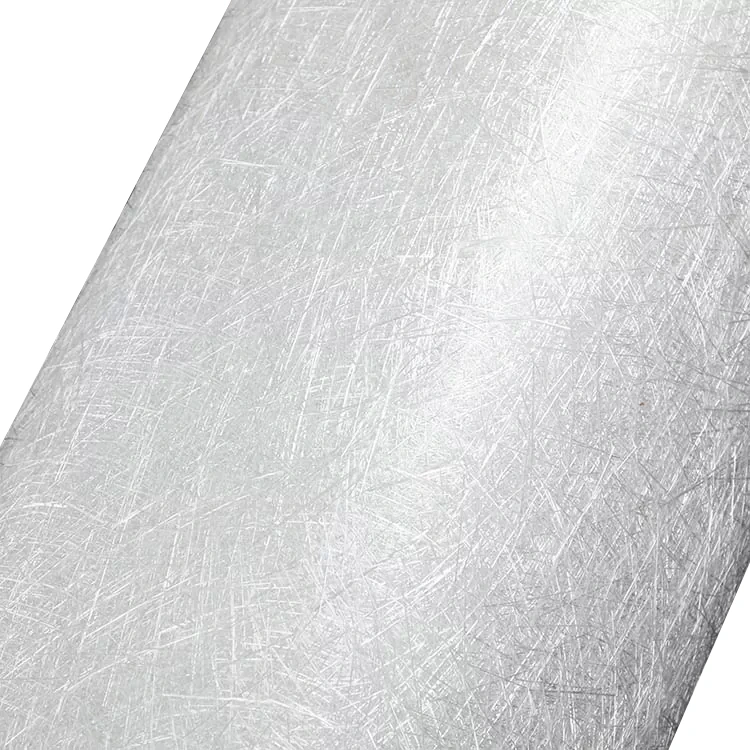
Understanding the Two Binder Systems
| Feature | Emulsion-Bound Fiberglass Chopped Strand Mat | Powder-Bound Chopped Strand Mat |
|---|---|---|
| Binder type | Emulsion (aqueous polymer dispersion) | Powder (polyester powder) |
| Mat integrity | High, excellent handling strength | Moderate, more prone to separation |
| Flexibility / drape | Excellent, conforms to complex molds | Stiffer, less conformable |
| Resin wet-out | Fast and uniform | Fast, but can be uneven at high weights |
| Compatibility | Broad, including epoxy, vinyl ester, and polyester | Mainly polyester and vinyl ester |
| Surface finish | Smooth, low fiber print-through | Good, slightly higher print-through |
| Typical use | Complex shapes, thick laminates, demanding finishes | Flat panels, high-volume press molding |
When Emulsion-Bound Mat Is the Better Choice
-
Complex mold geometry: The flexible binder allows the mat to drape over curves, corners, and radii without tearing or bridging.
-
Hand lay-up and spray-up operations: Higher wet strength keeps the mat intact during rolling and reduces fiber wash-out.
-
Thick laminates: Consistent wet-out supports uniform resin distribution and lower void content across multiple layers.
-
High-quality surface requirements: Finer fiber distribution delivers smoother surfaces and less print-through after finishing.
-
Broad resin compatibility: Emulsion-Bound Fiberglass Chopped Strand Mat performs reliably with epoxy, vinyl ester, and polyester systems.
-
Corrosion-resistant FRP: Uniform resin saturation supports chemical-resistant liners and tanks.
When Powder-Bound Mat May Be Preferred
-
Flat or simple panel production with limited drape requirements
-
High-volume matched-die and press molding where stiffness aids handling
-
Cost-driven projects with standard polyester resin systems
Selection Checklist
-
Confirm resin chemistry and cure profile.
-
Evaluate mold complexity and required drape.
-
Define laminate thickness and target void content.
-
Review surface finish and print-through specifications.
-
Validate storage conditions, since emulsion binders require controlled humidity.
-
Request samples from Yuruis for pilot trials before full production.
Frequently Asked Questions
Is Emulsion-Bound Fiberglass Chopped Strand Mat suitable for epoxy resin?
Yes, Emulsion-Bound Fiberglass Chopped Strand Mat is compatible with epoxy, vinyl ester, and polyester resins, provided the binder is matched to the resin system and cure schedule.
How should Emulsion-Bound Fiberglass Chopped Strand Mat be stored?
Store it in a dry, ventilated area at moderate temperature, keep rolls sealed against moisture, and rotate stock so older material is used first to preserve binder performance.
What causes white streaks or poor wet-out in Emulsion-Bound Fiberglass Chopped Strand Mat?
Incomplete wet-out usually stems from insufficient resin, low workshop temperature, or expired material; raising resin content, warming the resin, and using fresh Yuruis stock resolves most cases.
Conclusion
Choose Emulsion-Bound Fiberglass Chopped Strand Mat when drape, handling strength, surface quality, and broad resin compatibility matter more than the lower cost of powder-bound mat. For technical data, samples, and pricing, contact us at Yuruis today and let our team recommend the right mat for your process.