

What Makes Glassine Paper Bags Stand Out in Eco-Packaging?
2026-10-26
A packaging buyer is comparing three quotations for a bakery's pastry bags. All three suppliers quote a 40gsm glassine paper bag. The first quote is $28 per 1,000 bags. The second is $34. The third is $45. The buyer asks why the price varies so much for what appears to be the same product. The answer is not the supplier's margin. It is the paper source, the barrier treatment, the bag construction, and the certification. A 40gsm glassine paper bag from an FSC-certified mill with a controlled grease barrier is not the same product as a 40gsm bag from an unverified source with inconsistent transparency. This guide explains what makes glassine paper bags stand out in eco-packaging and how to verify the differences before ordering.
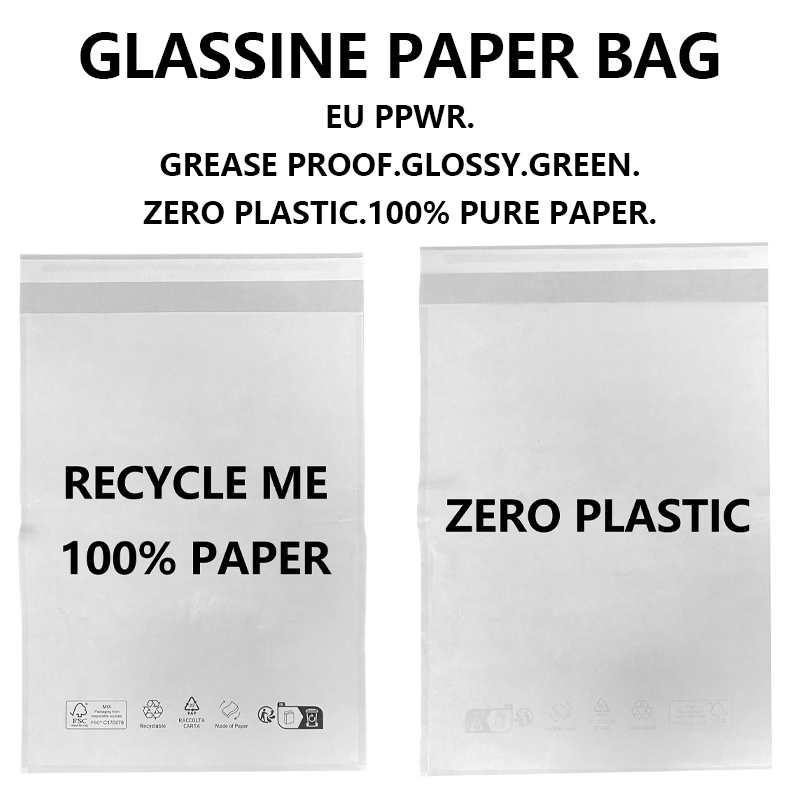
1. Why Does Grammage Matter When Specifying a Glassine Paper Bag for Eco-Packaging?
Grammage is the weight of the paper per square meter. For glassine, the grammage determines the density, the transparency, the stiffness, and the barrier performance. A lower grammage produces a more transparent and flexible bag, but it offers less grease resistance. A higher grammage produces a stiffer and more opaque bag with better barrier performance. The 40gsm grade is the most common specification for food-contact glassine bags because it balances transparency, strength, and cost. The table below shows the performance characteristics of different grammages.
| Grammage | Transparency | Stiffness | Grease resistance (kit rating) | Typical application |
| 30gsm | High | Low | 3 – 4 | Light pastry, confectionery |
| 40gsm | High to moderate | Moderate | 5 – 6 | Pastry, sandwiches, deli |
| 50gsm | Moderate | Moderate to high | 6 – 7 | Fried food, oily snacks |
| 60gsm | Low | High | 7 – 8 | Heavy greasy food, industrial |
In our factory, we produce the 40gsm glassine paper bag as our standard food-contact grade. We verify the grammage of every batch with a precision balance according to ISO 536. The tolerance is ±2 percent. Zeal X International Limited has been supplying glassine packaging for over 10 years.
2. What Makes Glassine Different From Coated Paper and PE-Laminated Bags?
Glassine is produced by a process called supercalendering. The paper pulp is refined, formed, and then passed through a series of polished steel rollers under high pressure. This process densifies the fibers and creates a smooth, non-porous surface without any coating or plastic lamination. The result is a paper that is naturally grease-resistant and transparent. Coated paper uses a clay or polymer coating to achieve barrier properties, which can interfere with recyclability. PE-laminated paper uses a plastic film bonded to the paper, which makes the bag non-recyclable in most paper streams. The table below compares the three materials.
| Property | 40gsm glassine paper bag | Coated paper bag | PE-laminated paper bag |
| Barrier mechanism | Densified fiber, no coating | Surface coating | Plastic film lamination |
| Recyclability in paper stream | Yes | Often yes, depends on coating | No (requires separation) |
| Compostability | Yes (certified grades) | Limited | No |
| Grease resistance | Good (kit 5 – 6) | Good to very good | Excellent |
| Transparency | High | Low | Low |
Packaging buyer's note: The glassine bag is the only option among the three that is both transparent and compostable. If the brand wants the customer to see the product through the bag and to dispose of the bag in the food waste bin, glassine is the only choice. In our factory, we supply 40gsm glassine paper bag units in both standard and certified compostable grades. We provide the certification documentation with each order.
3. How Does the Bag Construction Affect Barrier Performance and Shelf Life?
The bag construction determines how well the glassine paper performs in use. A flat bag with a simple open top is the most economical, but it offers no closure and limited barrier protection. A side-gusset bag allows the bag to expand, which is useful for bulky items, but the gusset folds create paths for grease to migrate. A self-seal bag with a peel-and-stick adhesive strip provides a secure closure, but the adhesive must be food-safe and must not interfere with the recyclability of the bag. The table below shows the bag types and their performance.
| Bag type | Closure method | Grease resistance retention | Recommended storage period |
| Flat open-top | None (fold or twist) | 100% (no folds) | 3 – 6 months |
| Side-gusset | None (fold or twist) | 85 – 90% (gusset migration) | 2 – 4 months |
| Self-seal with adhesive strip | Peel-and-stick | 95 – 100% | 6 – 9 months |
| Heat-sealable | Heat seal | 100% | 9 – 12 months |
In our factory, we produce the 40gsm glassine paper bag in flat, side-gusset, and self-seal configurations. The self-seal version uses a food-safe acrylic adhesive that is approved for direct food contact. We also offer a heat-sealable version for customers who have a heat sealer in their packing line. Zeal X International Limited provides bag samples so that the customer can test the barrier performance with the actual product.
4. Why Does the Paper Source Determine Whether the Bag Is Truly Eco-Friendly?
The eco-friendly claim of a glassine paper bag depends on the source of the paper pulp. Glassine is made from wood pulp. If the pulp comes from an unsustainable forest, the bag contributes to deforestation, regardless of its recyclability. The FSC (Forest Stewardship Council) certification verifies that the pulp comes from responsibly managed forests. The bleaching process also matters. Elemental chlorine-free (ECF) bleaching reduces the formation of dioxins compared to chlorine gas bleaching. Totally chlorine-free (TCF) bleaching eliminates chlorine entirely. The table below shows the certification and bleaching options.
| Certification / process | What it verifies | Availability in 40gsm glassine | Typical cost premium |
| FSC 100% | Pulp from certified responsible forests | Yes | 5 – 10% |
| FSC Mix | Mix of certified and recycled fiber | Yes | 2 – 5% |
| ECF bleaching | No chlorine gas; dioxin reduction | Standard | None |
| TCF bleaching | No chlorine at all | Limited | 10 – 15% |
| Compostable certification | Passes EN 13432 or ASTM D6400 | Yes (specific grades) | 8 – 12% |
In our factory, we source the paper for our 40gsm glassine paper bag from FSC-certified mills. We provide the FSC chain-of-custody certificate with each shipment. We also offer a compostable grade that is certified to EN 13432. Zeal X International Limited can supply the certification documentation for the customer's sustainability reporting.
5. How Should Buyers Verify Glassine Bag Quality Before Bulk Ordering?
Before placing a bulk order, the buyer should verify four quality parameters. The first is the grammage. The buyer should weigh a sample of the bag on a precision balance and compare the result to the specification. The second is the transparency. The buyer should hold the bag up to a light source and check for uniform transparency. Cloudy patches indicate inconsistent calendering. The third is the grease resistance. The buyer should perform a kit test or a simple oil spot test on a sample bag. The fourth is the seal strength for self-seal bags. The buyer should peel the adhesive strip and check that it adheres securely without tearing the paper. The table below shows the verification methods and acceptance criteria.
| Verification item | Method | Acceptance criteria |
| Grammage | Precision balance (ISO 536) | 40gsm ±2% |
| Transparency | Visual inspection under light | Uniform, no cloudy patches |
| Grease resistance | Kit test or oil spot test | Kit 5 – 6 minimum |
| Seal strength | Peel test | No tearing of paper; adhesive remains on strip |
| Certification | Document review | FSC certificate valid and matches order |
Buyer's verification tip: Order a sample of 100 bags before the bulk order. Use the sample to pack the actual product and store it under the expected conditions for two weeks. Check the bag for grease migration, transparency change, and seal failure. This simple trial catches most quality problems before they reach the production line. In our factory, we provide a free sample pack of 50 bags for this purpose.
Frequently Asked Questions About Glassine Paper Bags in Eco-Packaging
Summary for Packaging Buyers and Brand Owners
The 40gsm glassine paper bag stands out in eco-packaging because it combines transparency, grease resistance, recyclability, and compostability in a single uncoated material. The grammage determines the balance between transparency, stiffness, and barrier performance. The bag construction affects the grease resistance retention and the shelf life. The paper source determines whether the eco-friendly claim is credible. Buyers should verify the grammage, transparency, grease resistance, seal strength, and certification before placing a bulk order. Zeal X International Limited has been supplying glassine packaging for over 10 years and provides FSC certification, compostability documentation, and free sample packs for our customers.