
What is the True Lifecycle Analysis of a Chip Paper Cup from Forest to Landfill
2026-03-24
When a customer holds a Chip Paper Cup, they rarely consider the complex journey that began months earlier in a forest. At Zhongjun, we believe that understanding this journey is essential for businesses aiming to make responsible packaging choices. The true lifecycle of a Chip Paper Cup involves raw material extraction, manufacturing, distribution, usage, and finally, end-of-life management—each stage carrying distinct environmental and operational impacts.
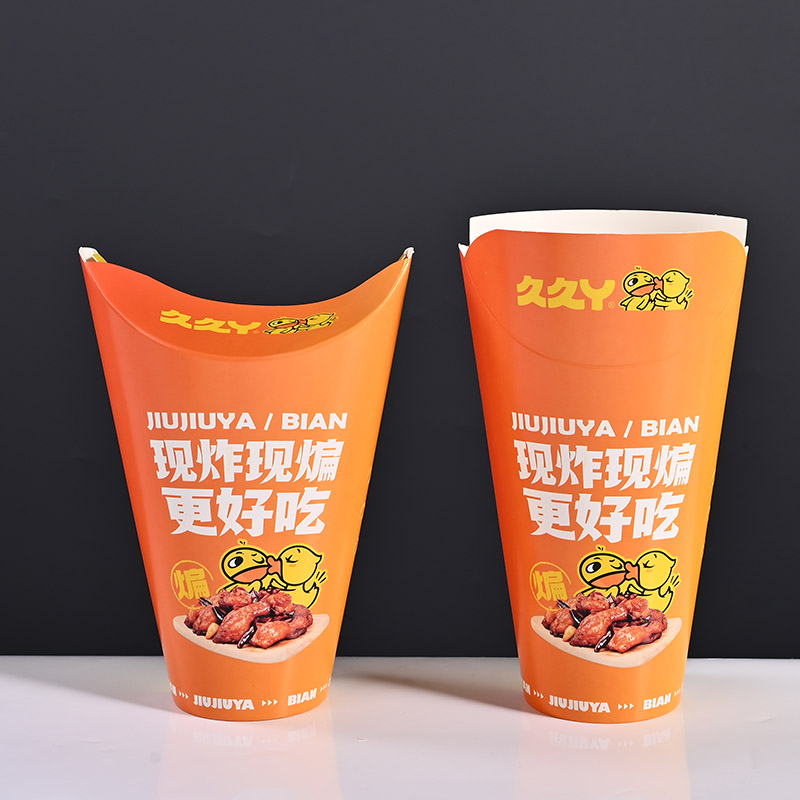
To provide a professional assessment, the lifecycle is broken down into five key stages in the table below.
| Lifecycle Stage | Key Processes | Environmental & Operational Considerations |
|---|---|---|
| Raw Material | Harvesting trees; pulping; adding polyethylene (PE) or water-based coating. | Sourcing from managed forests (FSC certification) reduces deforestation risk. Coating type determines recyclability. |
| Manufacturing | Pulp molding; cup forming; printing; quality control. | Energy consumption and water usage vary significantly. Zhongjun prioritizes high-efficiency machinery to minimize waste during production. |
| Distribution | Packaging; warehousing; transportation to retailers. | Carbon footprint depends on shipping distances and packaging density. Lightweight design helps lower transport emissions. |
| Usage Phase | Filling with hot or cold food; customer handling. | Functional performance (leakage resistance, insulation) directly affects consumer satisfaction and reduces secondary waste. |
| End-of-Life | Disposal; collection; recycling; landfill; or composting. | Most standard Chip Paper Cup products are not accepted in mainstream recycling due to plastic linings, leading to landfill dominance. |
From a professional standpoint, the most critical factor in the lifecycle is the barrier coating. Traditional cups use a thin plastic film that makes them waterproof but renders them non-recyclable in standard facilities. In contrast, advanced alternatives—such as water-based dispersion coatings used by Zhongjun—allow the cup to be repulped and recycled, effectively altering the end-of-life outcome.
Chip Paper Cup FAQ Common Questions
What makes a Chip Paper Cup non-recyclable in most cities
A standard Chip Paper Cup is composed of paperboard laminated with a thin layer of polyethylene (plastic). While the paper fiber is recyclable, the plastic liner cannot be easily separated during the conventional recycling process. Most municipal facilities lack the specialized equipment to remove this coating, so the entire cup is rejected and sent to landfill or incineration. However, cups manufactured with water-based barrier coatings, such as those offered by Zhongjun, can be processed in standard paper recycling streams because the coating dissolves during repulping.
How long does a Chip Paper Cup take to decompose in a landfill
In a typical landfill environment, a conventional Chip Paper Cup can take over 20 years to fully break down. The plastic lining significantly slows degradation, and the lack of oxygen and moisture in modern sanitary landfills further preserves the materials. Even the paper component decomposes slowly under these conditions, releasing methane—a potent greenhouse gas. Choosing compostable or recyclable cup structures is one of the most effective ways to reduce this long-term environmental burden.
What should food businesses look for when sourcing sustainable Chip Paper Cup products
Food businesses should prioritize three key factors. First, material composition: opt for cups with water-based or compostable coatings instead of traditional polyethylene. Second, certifications: look for FSC-certified paperboard to ensure responsible forestry, and verify if the cup meets recyclability or compostability standards such as BPI or TÜV OK Compost. Third, supplier transparency: manufacturers like Zhongjun provide detailed lifecycle data and testing results, enabling businesses to make verified sustainability claims rather than relying on generic marketing terms.
Beyond the product itself, the broader impact of a Chip Paper Cup is shaped by how it fits into a circular economy. Businesses can reduce lifecycle burdens by selecting cups designed for recyclability, training staff on proper waste sorting, and working with waste management partners that accept coated paper products. Infrastructure is evolving, and early adoption of next-generation cup technologies positions brands as leaders in operational sustainability.
At Zhongjun, we specialize in manufacturing Chip Paper Cup solutions that balance functional excellence with environmental responsibility. Our products are engineered with advanced barrier technologies to support both recyclability and reliable performance.
Contact us today to discuss how our custom cup solutions can align with your sustainability goals and operational requirements.