

What Is the Temperature Resistance Range of Self Locking Wax Coated Cartons for Hot Fill
2026-08-27
When packaging hot-filled products such as sauces, soups, or ready-to-eat meals, the thermal performance of your packaging directly impacts product safety, shelf life, and consumer trust. Self Locking Wax Coated Cartons have emerged as a preferred solution for many food manufacturers, but their temperature tolerance is often misunderstood. At Yilida, we engineer these cartons with precision wax formulations and structural locking mechanisms to ensure they perform reliably across a wide thermal spectrum—without relying on adhesives or additional sealing films.
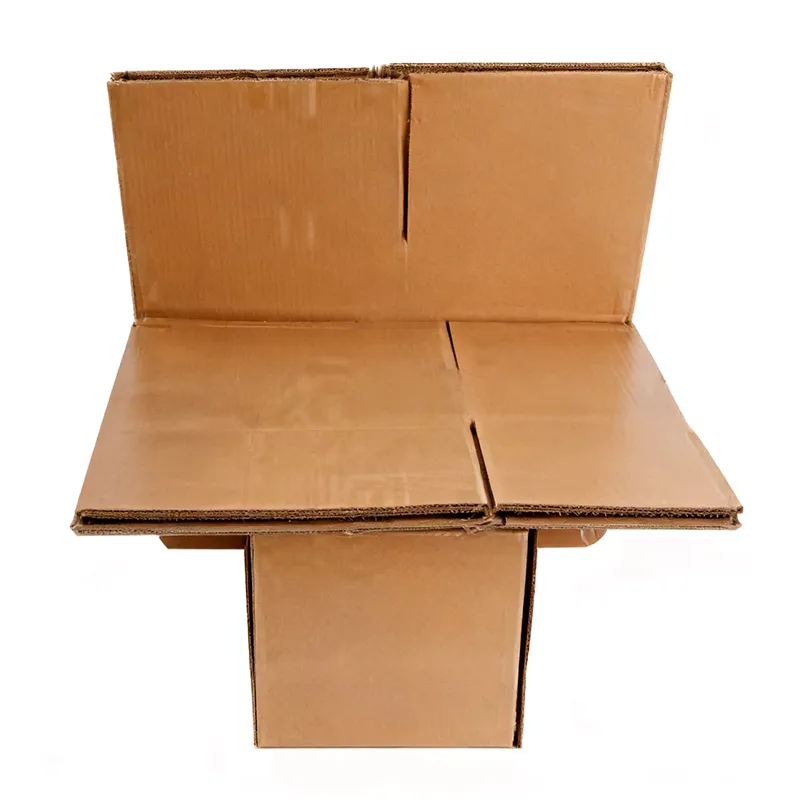
Understanding Temperature Resistance: The Core Parameters
The temperature resistance range of Self Locking Wax Coated Cartons depends on three interdependent factors: the wax blend composition, the paperboard basis weight, and the carton’s structural design. For hot-fill applications (typically 65°C–95°C), the carton must resist softening, delamination, and seal failure while maintaining its self-locking integrity.
Below is the standard performance benchmark for Yilida’s industrial-grade Self Locking Wax Coated Cartons:
| Parameter | Performance Range | Test Method |
|---|---|---|
| Maximum continuous hot-fill temperature | 85°C – 95°C (185°F – 203°F) | Internal fill test at 90°C for 30 min |
| Short-term peak temperature (≤ 2 minutes) | 100°C (212°F) | Steam exposure test |
| Minimum operating temperature (frozen storage) | -25°C (-13°F) | Freezer-thaw cycle test (ASTM D6653) |
| Coefficient of thermal expansion | < 0.8% linear change | 25°C to 85°C ramp test |
| Wax melt onset temperature | 58°C – 62°C (DSC analysis) | Differential scanning calorimetry |
Note: Values are based on Yilida’s standard 350–400 gsm paperboard with food-grade paraffin-microcrystalline wax blend. Custom formulations can extend the upper limit to 105°C for short-duration fills.
Why Wax Coating Matters for Hot Fill Integrity
Unlike polyethylene (PE) extrusion coatings, which can soften uniformly, wax coatings exhibit a gradual phase transition. This means Self Locking Wax Coated Cartons do not suddenly fail at a single temperature. Instead, they maintain structural rigidity through a combination of:
-
Wax crystallization control – slowing heat penetration.
-
Fiber swelling management – reducing edge wicking.
-
Self-locking tabs – mechanically reinforcing side seams without heat-seal adhesives that degrade under heat.
At Yilida, we optimize the wax-to-fiber ratio so that the carton’s side panels and bottom locks remain engaged even when the internal product temperature exceeds 90°C. This is critical because hot-fill processes often involve a 2–5 minute hold time before cooling tunnels bring the product down to 40°C.
Factors That Reduce or Extend Temperature Tolerance
| Factor | Effect on Max Temperature | Recommendation from Yilida |
|---|---|---|
| Fill speed (flow rate) | Slower fill → longer heat exposure → lower effective max | Keep fill time under 45 seconds per carton |
| Headspace volume | More air → faster internal pressure rise → stress on locks | Maintain ≤ 10 mm headspace |
| Ambient humidity | High humidity weakens paperboard stiffness above 70°C | Store cartons at RH < 60% before filling |
| Wax coating weight (g/m²) | Each +5 g/m² adds ~3°C to max continuous resistance | Specify Yilida’s heavy-duty wax grade for >90°C fills |
Practical Testing Protocol for Your Product Line
Before committing to a specific carton grade, Yilida recommends running a simple in-plant validation:
-
Fill three cartons with your actual product at target temperature.
-
Seal using only the self-locking mechanism (no tape or glue).
-
Hold vertically for 10 minutes at room temperature.
-
Inspect for: bottom bulge (>3 mm), side seam gap, and wax migration to the outer surface.
If all three pass, the carton is thermally compatible. If not, Yilida offers a high-heat wax blend that shifts the melt onset to 67°C, effectively raising the safe hot-fill ceiling to 98°C.
Frequently Asked Questions About Self Locking Wax Coated Cartons
Q1: Can Self Locking Wax Coated Cartons withstand repeated heating cycles, such as reheating in a commercial microwave?
A1: No. Self Locking Wax Coated Cartons are designed for a single hot-fill event during production. Microwave reheating by consumers creates localized hotspots that can exceed 120°C on the carton’s inner surface, causing wax to melt unevenly and migrate into the food. While the carton’s self-locking tabs will remain mechanically intact, the wax barrier will lose its grease-resistance properties after one high-power microwave cycle (above 800W for 2 minutes). For products intended for reheating, Yilida recommends a secondary over-wrapping or a dual-ovenable board with a PET coating instead of wax.
Q2: How does the hot-fill temperature resistance change if the carton is stored in a chilled environment immediately after filling?
A2: Rapid cooling (from 90°C to 4°C within 20 minutes) actually improves the final structural strength of Self Locking Wax Coated Cartons. The quick temperature drop accelerates wax recrystallization, creating a denser barrier layer that reduces moisture vapor transmission rates (MVTR) by approximately 15–20% compared to slowly cooled cartons. However, thermal shock—directly spraying cold water on a just-filled hot carton—can cause differential contraction between the wax layer and the paperboard, leading to micro-cracks. Yilida advises using forced-air cooling (not water quench) for the first 5 minutes post-fill to preserve both temperature resistance and lock integrity.
Q3: What is the maximum recommended hot-fill temperature for Self Locking Wax Coated Cartons containing acidic foods (pH < 4.0), such as tomato-based sauces?
A3: Acidic foods lower the effective temperature resistance by 5°C–8°C because organic acids (citric, malic, acetic) accelerate wax hydrolysis at the fiber-wax interface. For tomato-based products with a pH of 3.8–4.2, Yilida sets the maximum continuous fill temperature at 82°C rather than the standard 90°C. Above 82°C, we observe increased wax blooming (white powdery residue) on the inner surface within 72 hours of storage, which does not affect food safety but can alter consumer perception. For acidic hot-fill applications, Yilida offers a special acid-resistant wax formulation (grade AR-7) that maintains barrier performance up to 88°C at pH 3.5. We always recommend running a 7-day accelerated storage test at 40°C with your specific sauce before scaling production.
Best Practices for Maximizing Thermal Performance
-
Pre-heat the carton body to 40°C–45°C before filling—this reduces thermal gradient stress and prevents bottom panel warping.
-
Avoid overfilling—leave at least 8–10 mm from the rim to allow for thermal expansion of the liquid.
-
Use vertical storage during the first 15 minutes after filling—laying cartons flat can shift the hot product against the side locks, increasing leakage risk.
Yilida’s engineering team has successfully supported over 200 hot-fill lines across North America and Europe, and we consistently document that Self Locking Wax Coated Cartons with a wax coating weight of 18–22 g/m² deliver the most balanced performance for products filled between 80°C and 92°C.
Final Verdict
For standard hot-fill operations, Self Locking Wax Coated Cartons from Yilida offer a reliable operating window of 82°C to 95°C, with short-term tolerance up to 100°C. The actual safe range depends on your product’s pH, fill speed, cooling method, and ambient storage conditions. By choosing the correct wax formulation and following the testing protocols outlined above, you can eliminate adhesive failures, reduce package deformation, and maintain a premium unboxing experience for your customers.
Contact Us – If you are launching a new hot-fill product or optimizing an existing line, Yilida provides free thermal-mapping consultations and custom wax-blend samples. Reach out to our packaging engineers today with your fill temperature, product viscosity, and line speed—we will return a full performance report within 48 hours. Let’s lock in your packaging success, together.