

What Are the Most Common Uses for Lowbed Trailers in Transportation
2025-12-12
When you face the daunting task of moving colossal, heavy, or oversized equipment, what is your first thought? For industry professionals across the globe, the answer is often the same: a Lowbed Trailer. These specialized workhorses are the backbone of heavy haul transportation, solving some of the most complex logistical puzzles. At Derun, we don’t just build trailers; we engineer solutions for these very challenges. I’ve seen firsthand how the right Lowbed Trailer can transform a project from a high-risk endeavor into a streamlined operation. So, let's dive into the world of heavy hauling and explore the pivotal roles these trailers play.
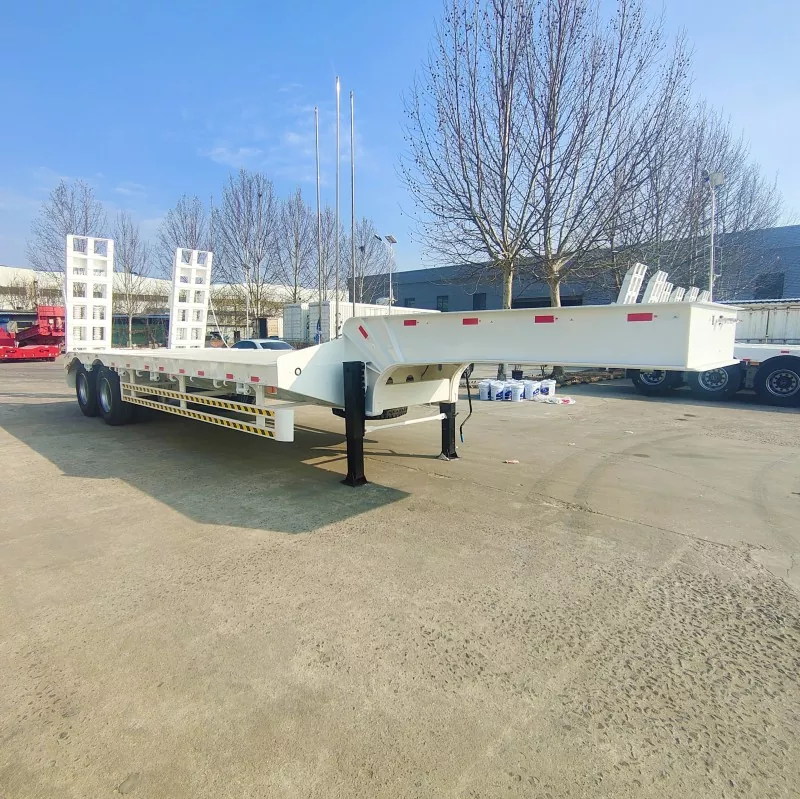
What Industries Rely Heavily on Lowbed Trailers
You might wonder where you’ll typically find a Lowbed Trailer in action. The truth is, they are indispensable across multiple sectors where moving heavy assets is a daily requirement. Their design prioritizes a low ground clearance and a detachable gooseneck, allowing them to carry cargo that would be impossible for standard trailers.
-
Construction: Transporting bulldozers, excavators, cranes, and asphalt pavers to and from job sites.
-
Agriculture: Hauling large combines, tractors, and irrigation systems.
-
Energy: Moving wind turbine blades, transformer units, and drill rigs for oil, gas, and renewable projects.
-
Mining: Transporting massive earth-moving machinery like haul trucks and loaders.
-
Infrastructure: Carrying bridge girders, pre-cast concrete segments, and heavy machinery for road and rail projects.
-
Manufacturing: Relocating industrial components, presses, and generators.
In each scenario, the Derun Lowbed Trailer is more than transport; it's a critical link in the supply chain, ensuring that multi-million dollar equipment arrives safely, on time, and ready to work.
What Key Features Define a High-Performance Lowbed Trailer
Not all lowbeds are created equal. When investing in or hiring one, knowing the core parameters is crucial for safety and efficiency. At Derun, our engineering philosophy centers on durability, safety, and adaptability. Here are the non-negotiable features we focus on:
-
Ultra-Low Deck Height: Essential for maximizing vertical clearance under bridges and power lines when carrying tall equipment.
-
High Load Concentration Capacity: The deck must withstand immense point loads from tracks or outriggers.
-
Superior Deck Strength: Utilizing high-tensile steel for longevity and resistance to deformation.
-
Multiple Axle Configurations: Often with hydraulically steerable axles for improved maneuverability.
-
Advanced Suspension Systems: Typically, air or rubber suspension to protect both the cargo and the road.
-
Comprehensive Safety Package: Including robust lighting, anti-lock braking systems (ABS), and securement points.
How Do Derun Lowbed Trailer Specifications Meet Rigorous Demands
Let’s get specific. When you’re planning a load, generalities aren’t enough. You need hard data. Below is a detailed breakdown of standard specifications for a Derun 3-axle lowbed model, designed to give you the confidence to make informed decisions.
Table 1: Standard Specifications for a Derun 3-Axle Lowbed Trailer
| Parameter | Specification | Industry Benefit |
|---|---|---|
| Deck Length | 48 ft / 14.6 m | Accommodates most mid-sized construction equipment. |
| Overall Width | 102 in / 2.59 m | Optimized for road legality without requiring wide-load escorts. |
| Deck Height (Loaded) | 24 in / 60 cm | Ultra-low profile for superior height clearance. |
| Load Capacity | 55 tons / 50 metric tons | Handles a D8-class bulldozer or a large mobile crane with ease. |
| Deck Material | High-Tensile T1 Steel | Provides exceptional strength-to-weight ratio and resists fatigue. |
| Suspension Type | 4-Bag Air Ride | Offers a smoother ride and protects delicate machinery from vibration. |
| Tire Configuration | 12 (11R22.5) | Ensures even weight distribution and improved stability. |
For even more demanding projects, our extendable and multi-axle configurations offer unparalleled flexibility. The next table compares these advanced options to help you scale your solution.
Table 2: Comparison of Derun Advanced Lowbed Trailer Configurations
| Feature | Extendable Lowbed | Multi-Axle Line Haul (8+ Axles) |
|---|---|---|
| Primary Use Case | Long or irregularly shaped loads (wind blades, beams). | Extreme weight loads (power plant equipment, mega generators). |
| Key Advantage | Adjustable deck length provides versatility for various projects. | Distributes massive weight legally across many axles, minimizing road damage. |
| Typical Capacity Range | 40-80 tons | 80 - 200+ tons |
| Maneuverability Focus | Adjustable length for navigating complex site logistics. | Hydraulic axle steering and lifting for navigating tight turns. |
| Ideal For | Infrastructure and wind energy sectors. | Heavy manufacturing, mining, and mega-infrastructure projects. |
What Are the Most Frequent Questions Shippers Ask About Lowbed Trailers
In my daily conversations with logistics managers, certain questions arise time and again. Here’s a straightforward FAQ to address common concerns.
FAQ 1: How do I determine if I need a permit for my Lowbed Trailer load?
The need for a permit depends on the gross vehicle weight, dimensions (width, height, length), and the route you plan to take. Any load that exceeds standard legal limits—typically over 8.5 feet wide, 13.5 feet high, or 48 feet long, or over 46,000 lbs in many states—will require special permits. Always consult with your transportation provider or state DOT well in advance.
FAQ 2: What is the difference between a step-deck and a true Lowbed Trailer?
A step-deck has two deck levels: a higher front section and a lower rear section, accessed by a fixed ramp. Its capacity usually maxes out around 25-50 tons. A true Lowbed Trailer has a uniform, ultra-low deck height along its entire length, often with a detachable gooseneck for ground-level loading. It is built for much heavier weights (50+ tons) and accommodates taller, heavier machinery that cannot climb a steep ramp or fit on a step-deck.
FAQ 3: How important is axle configuration and spacing on a Lowbed Trailer?
Extremely important. Axle configuration and spacing (spread) are critical for calculating the trailer's weight distribution and ensuring compliance with state bridge laws. Proper spacing prevents excessive weight on any single road point and is the key to legally transporting heavy loads. A well-designed Lowbed Trailer like those from Derun will have optimized axle spreads to maximize payload capacity within legal limits.
Why Should Your Next Heavy Haul Rely on a Derun Lowbed Trailer
Choosing the right equipment partner is as crucial as the route planning itself. At Derun, we understand that your reputation is on the line with every shipment. Our Lowbed Trailers are not merely products; they are a promise of reliability engineered into every beam, weld, and axle system. We incorporate real-world feedback from haulers like you to continuously refine our designs for better performance, easier operation, and enhanced safety. When you specify a Derun, you’re choosing a trailer built to handle the stress so your project doesn’t have to.
The journey of a thousand tons begins with a single, perfectly executed haul. Don’t let equipment transportation be the weakest link in your project chain.
Contact us today for a detailed consultation. Let our team of experts analyze your specific load and route challenges, and recommend the optimal Derun Lowbed Trailer configuration to ensure your cargo arrives safely, efficiently, and on budget. Your most challenging transport problem is our most inspiring solution.