
What Are the Key Structural Layers of a Valve Mouth Paper Bag?
2026-09-01
A valve mouth paper bag is a precision engineered package. It is not a simple paper tube—it is a composite structure of multiple layers, each serving a distinct function. The layers must work together to contain the product, resist moisture, provide strength, and allow clean filling. This article examines the role of each layer, the materials used, and how the layer configuration changes depending on the product being packed.
1. What Is the Outer Layer and What Does It Do?
The outermost layer of a Valve Mouth Paper Bag is the first line of defense. It is typically made from natural kraft paper or bleached paper, with a grammage ranging from 70 to 90 gsm. This layer provides mechanical strength to resist tearing during handling and palletizing. It also receives the printing—brand logos, product information, and handling instructions. In our factory, we use paper sourced from FSC certified mills, with a tensile strength of at least 4.5 kN/m in the machine direction. The outer layer is often treated with a sizing agent to improve its resistance to surface moisture. For bags destined for humid environments, we can apply a water resistant coating to the outer layer. The outer layer is also the layer that determines the bag's appearance and shelf appeal. At Wenzhou Chenxing Packaging Co., Ltd., we offer flexographic printing up to 8 colors on the outer layer, using water based inks that are food safe.
2. How Do the Middle Layers Contribute to Strength and Barrier Protection?
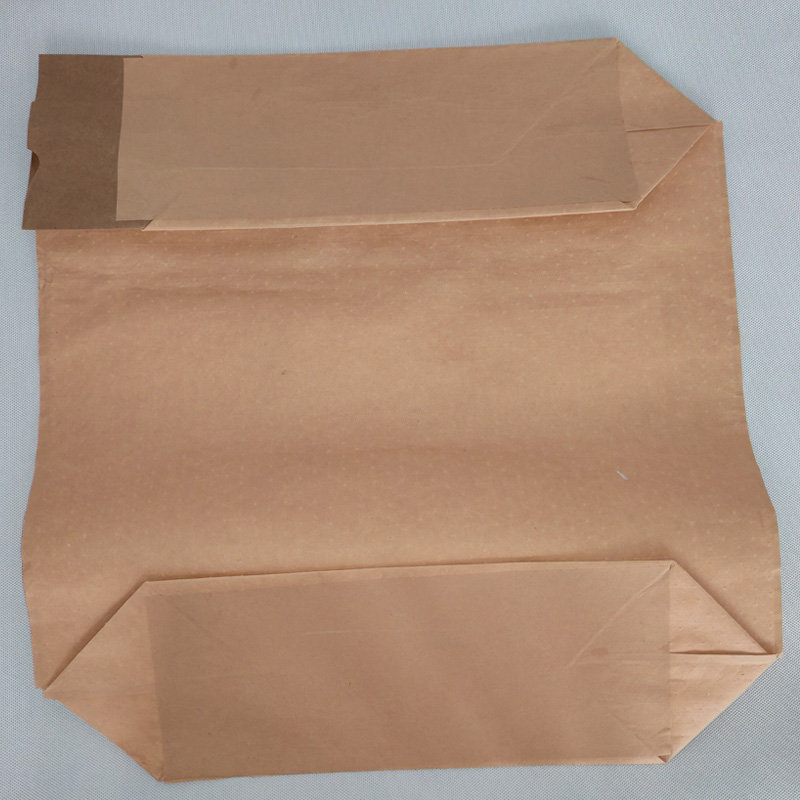
Between the outer layer and the inner lining, there are one or more middle layers. These layers provide the bulk of the structural strength. In a standard 3 ply Valve Mouth Paper Bag, the middle layer is usually a 70 to 80 gsm kraft paper with a higher burst strength than the outer layer. The middle layer absorbs the impact forces during filling and transport. For products that are sensitive to moisture, we insert a layer of polyethylene (PE) film between the middle layers. This PE layer acts as a moisture barrier, preventing water vapor from migrating from the atmosphere into the product. For cement or mineral powders, this is critical because even a small amount of moisture can cause caking. The table below shows the typical layer configurations for different product types.
| Product type | Typical layer count | Middle layer materials | Barrier layer |
| Cement / dry mortar | 3 ply | Kraft 80 gsm + Kraft 70 gsm | PE film (20 micron) between plies |
| Animal feed / grain | 2 ply | Kraft 80 gsm only | None (breathable) |
| Chemicals / pigments | 4 ply | Kraft 70 + Kraft 70 + Kraft 70 | PE film (25 micron) + aluminum foil |
| Food products (flour, sugar) | 3 ply | Kraft 70 + Kraft 70 | PE film (15 micron) for grease resistance |
The middle layers are also where we adjust the bag's porosity. For products that need to breathe, such as fresh produce, we use uncoated kraft paper. For products that must be sealed tight, we use a fully laminated structure. Our factory can produce Valve Mouth Paper Bag structures with up to 5 plies, depending on the strength and barrier requirements.
3. What Is the Inner Lining and Why Does It Matter for Product Integrity?
The inner lining is the layer in direct contact with the product. It must be chemically compatible with the product to prevent contamination or degradation. For most dry powders, a simple PE lining is sufficient. The PE is usually 15 to 30 microns thick and is applied as an extrusion coating on the innermost paper ply. For products that are oily or that contain volatile compounds, we use a co extruded film that includes a barrier layer such as EVOH (ethylene vinyl alcohol) or a metalized film. The inner lining also determines the slip properties of the bag—how easily the product slides into the bag during filling. Our factory controls the coefficient of friction (CoF) of the inner lining to ensure smooth filling. For a standard Valve Mouth Paper Bag used for cement, the CoF is set to 0.25 to 0.35. For bags used for plastic granules, which need to flow easily, we reduce the CoF to 0.15 to 0.20 by adding a slip agent to the PE.
4. How Is the Valve Layer Different From the Main Bag Body?
The valve layer is not a full layer of the bag body—it is a localized structure at the top corner of the bag. The valve allows the bag to be filled quickly by forcing the spout of the filling machine into the valve opening. The valve itself is made from two strips of paper (or paper and PE) that are folded to form a channel. The inner strip is often coated with PE to create a seal that closes automatically when the filling spout is withdrawn. The valve layer must be strong enough to withstand the repeated insertion of the filling spout, which can happen at up to 10 bags per minute. Our factory reinforces the valve area with an additional patch of paper, typically 100 gsm, to prevent tearing. The valve must also have a precise length and width to ensure compatibility with the filling machine. We offer valves in lengths of 100 to 180 mm, which is the standard range for most automatic filling lines.
Frequently Asked Questions About Valve Mouth Paper Bag Layers
Final Summary
The structural layers of a Valve Mouth Paper Bag are not just a stack of paper sheets. Each layer has a specific role: the outer layer protects and carries the branding, the middle layers provide strength and optional barrier properties, the inner lining ensures product purity and flow, and the valve layer enables fast filling. The configuration of these layers must be matched to the product, the filling equipment, and the handling conditions. Our factory has extensive experience in producing customized structures for a wide range of industries. Wenzhou Chenxing Packaging Co., Ltd. is ready to support your packaging requirements.