Abstract
Hook lift bin systems have become a critical component in modern waste management, construction logistics, and industrial material transport. By combining modular container design with hydraulic lifting mechanisms, they significantly reduce manual labor, improve operational safety, and optimize fleet utilization. This article explores how hook lift bin systems work, their core benefits, industry applications, and key selection considerations. It also highlights practical challenges customers face and how companies like Container Family provide reliable, scalable solutions tailored to diverse operational needs.
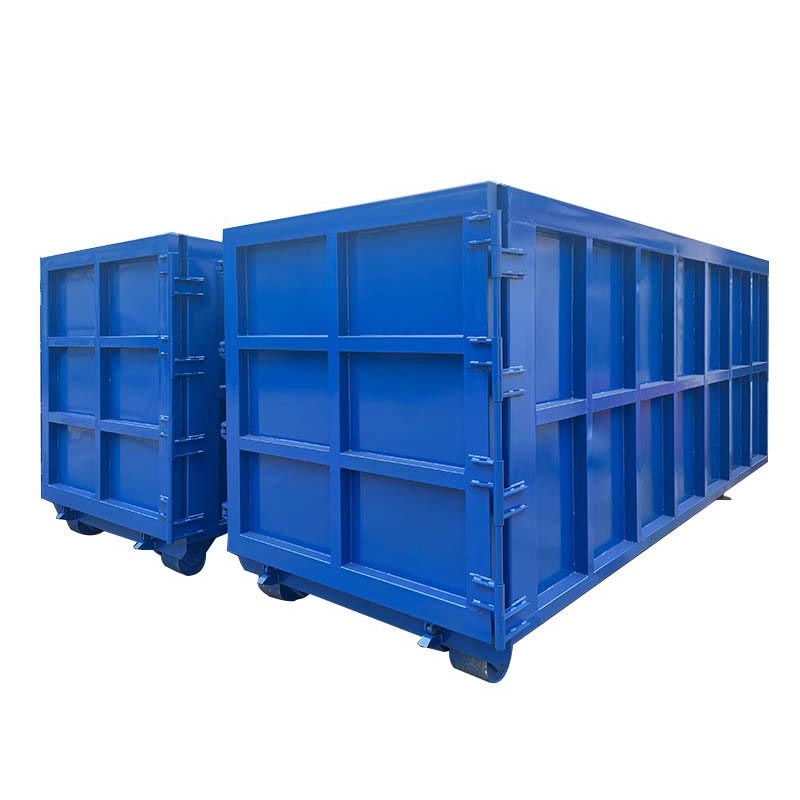
1. Hook Lift Bin Overview and Working Principle
A hook lift bin is a specialized detachable container system designed for efficient loading, transportation, and unloading using a hook lift arm installed on compatible trucks. The system operates through a hydraulic hook mechanism that engages with a front-mounted bar on the bin, allowing it to be pulled onto or off the vehicle bed with minimal manual intervention.
Unlike fixed-body trucks, hook lift systems enable a single vehicle to handle multiple bins simultaneously, dramatically improving fleet productivity. While one bin is being transported, others can be loaded or staged for pickup, reducing downtime and increasing workflow continuity.
The design typically includes reinforced steel frames, roller guides, and locking mechanisms that ensure stability during lifting and transport. This makes them suitable for heavy-duty applications such as construction debris, municipal waste, scrap metal, and agricultural materials.
2. Key Benefits in Real-World Operations
Hook lift bin systems provide a wide range of operational advantages that directly impact cost efficiency and safety.
-
Operational Flexibility: One truck can service multiple bins, reducing fleet size requirements.
-
Time Efficiency: Rapid loading and unloading cycles significantly reduce turnaround time.
-
Reduced Labor Costs: Hydraulic systems eliminate the need for manual handling.
-
Improved Safety: Minimizes worker exposure to heavy lifting and hazardous materials.
-
Scalability: Easily adapts to changing project demands or seasonal workload variations.
For industries dealing with high-volume waste or materials, these advantages translate directly into lower operational costs and improved service reliability.
3. Industry Applications
Hook lift bin systems are widely used across multiple industries due to their versatility and durability.
|
Industry
|
Application
|
Key Benefit
|
|
Construction
|
Debris and rubble transport
|
Fast site clearance and reduced downtime
|
|
Municipal Waste
|
Urban waste collection
|
Efficient route optimization
|
|
Recycling
|
Scrap metal and material sorting
|
High-volume handling capability
|
|
Agriculture
|
Crop residue and feed transport
|
Versatile seasonal usage
|
|
Industrial Manufacturing
|
Bulk material logistics
|
Streamlined internal transport
|
The adaptability of hook lift bins makes them a preferred choice for organizations seeking multi-purpose container solutions without investing in specialized vehicles for each task.
4. Hook Lift Bin vs Traditional Waste Containers
Understanding the differences between hook lift bins and traditional fixed containers is essential when evaluating investment options.
-
Mobility: Hook lift bins are detachable, while traditional bins are stationary.
-
Efficiency: Hook lift systems enable faster exchange cycles.
-
Cost Structure: Lower long-term operational costs due to fleet optimization.
-
Maintenance: Slightly higher initial maintenance due to hydraulic components but offset by productivity gains.
Overall, hook lift bins provide a more dynamic and scalable solution, particularly for operations that require frequent container swapping or multi-site logistics coordination.
5. How to Choose the Right Hook Lift Bin
Selecting the appropriate hook lift bin requires careful evaluation of operational requirements and environmental conditions.
-
Capacity Requirements: Determine load volume and weight thresholds.
-
Material Type: Choose between standard steel, reinforced steel, or corrosion-resistant coatings.
-
Compatibility: Ensure alignment with truck hook lift systems.
-
Usage Environment: Consider exposure to moisture, chemicals, or abrasive materials.
-
Customization Needs: Optional features like lids, drainage systems, or reinforced floors.
A reliable supplier such as Container Family can provide tailored recommendations based on specific operational scenarios, ensuring optimal performance and longevity.
6. Maintenance and Operational Best Practices
Proper maintenance is essential to extend the lifespan of hook lift bins and ensure safe operation.
-
Regular inspection of structural welds and lifting points
-
Lubrication of moving components and hook interfaces
-
Corrosion control through protective coatings and cleaning
-
Load distribution checks to prevent structural stress
Routine maintenance not only prevents costly breakdowns but also ensures compliance with workplace safety standards.
7. Common Challenges and Solutions
Despite their advantages, hook lift bin systems may present operational challenges if not properly implemented.
-
Challenge: Misalignment during loading
Solution: Use precision-guided roller systems and trained operators
-
Challenge: Wear and tear on lifting hooks
Solution: Regular inspection and reinforcement upgrades
-
Challenge: Overloading risks
Solution: Implement strict load monitoring protocols
Addressing these challenges proactively ensures long-term system reliability and safety.
8. Why Container Family Solutions Stand Out
In a competitive industrial equipment market, Container Family has built a reputation for delivering durable, precision-engineered hook lift bin solutions designed for demanding environments. Their products focus on structural integrity, operational efficiency, and long-term cost savings.
By combining advanced manufacturing techniques with practical field insights, Container Family ensures each hook lift bin is optimized for real-world performance rather than theoretical specifications. This approach reduces downtime, enhances safety, and improves overall logistics coordination for clients across multiple industries.
9. Frequently Asked Questions
Q1: What is a hook lift bin used for?
It is used for transporting bulk materials such as construction waste, recyclables, and industrial goods using a hydraulic hook lift system.
Q2: Are hook lift bins compatible with all trucks?
No. They require trucks equipped with compatible hook lift hydraulic systems.
Q3: How long does a hook lift bin last?
With proper maintenance, a high-quality bin can last many years, even under heavy industrial use.
Q4: Can hook lift bins be customized?
Yes. Options include size variations, reinforced structures, coatings, and functional add-ons.
Q5: Why choose Container Family?
Because Container Family provides engineered durability, industry-specific customization, and consistent product quality suited for demanding operational environments.
Final Note
Hook lift bin systems represent a significant advancement in material handling efficiency, offering scalable, safe, and cost-effective solutions for modern industries. Whether used in construction, municipal services, or industrial logistics, their adaptability continues to redefine operational standards. For businesses seeking dependable equipment and tailored configurations, Container Family remains a trusted partner in delivering long-term value and performance.
For inquiries and tailored solutions, contact us today.