

How Does a PU V Belt Improve Industrial Power Transmission?
2026-06-02
Article Summary: PU V belts are critical components in modern industrial machinery, offering superior efficiency, durability, and reliability. This article explores their design, applications, maintenance, advantages, and troubleshooting tips to help businesses maximize performance and reduce downtime.
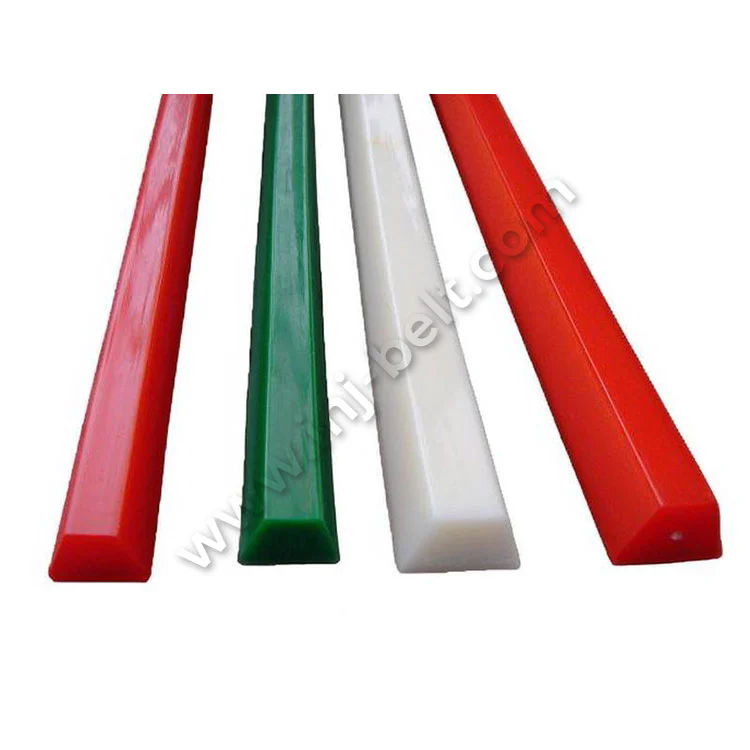
Table of Contents
- What is a PU V Belt?
- Advantages of PU V Belts
- Applications in Industry
- PU V Belt Selection Guide
- Installation and Maintenance
- Troubleshooting Common Issues
- FAQ
- Contact Information
What is a PU V Belt?
PU V belts, made from polyurethane reinforced with high-strength fibers, are designed to transmit power efficiently in various industrial machines. Unlike traditional rubber belts, PU V belts provide higher resistance to wear, heat, and chemical exposure, making them ideal for demanding environments.
- Material: Polyurethane with tensile cords.
- Design: Classic V-shaped cross-section for optimal grip.
- Function: Transfer rotational power between shafts with minimal slippage.
Advantages of PU V Belts
| Feature | Benefit |
|---|---|
| High Durability | Long service life even under heavy loads |
| Chemical Resistance | Unharmed by oils, greases, and industrial chemicals |
| Low Stretch | Maintains consistent tension for stable operation |
| Noise Reduction | Smoother operation and less vibration |
| Temperature Tolerance | Performs reliably in extreme temperatures |
Applications in Industry
PU V belts are versatile and widely used across various sectors:
- Automotive: Engine and auxiliary system drives.
- Textile Industry: Machinery requiring precise speed control.
- Food Processing: Conveyors and mixers exposed to oils and cleaning agents.
- Packaging: High-speed belt drives in automated packaging lines.
- Mining and Construction: Heavy-duty equipment requiring high torque transmission.
PU V Belt Selection Guide
Choosing the correct PU V belt is crucial for efficiency and longevity. Key considerations include:
- Belt Type: Determine if standard, narrow, or classical V belts suit your machinery.
- Dimensions: Width, length, and cross-sectional angle should match the pulleys.
- Load Capacity: Ensure the belt can handle peak torque demands.
- Environment: Consider chemical exposure, temperature, and dust conditions.
Example Table of Typical PU V Belt Specifications:
| Belt Type | Section Width (mm) | Pitch Length (mm) | Max RPM |
|---|---|---|---|
| Classical A | 10 | 1000-3000 | 5000 |
| Narrow B | 17 | 1500-4000 | 6000 |
| Classical C | 22 | 2000-5000 | 5500 |
Installation and Maintenance
Proper installation and maintenance of PU V belts extend operational life and reduce unplanned downtime.
- Inspection: Check for cracks, wear, or misalignment before installation.
- Tension Adjustment: Ensure correct tension; avoid over-tightening.
- Alignment: Pulley grooves should match belt cross-section precisely.
- Regular Cleaning: Remove dust, grease, and debris to prevent slippage.
- Replacement Schedule: Monitor wear and replace before failure occurs.
Troubleshooting Common Issues
PU V belts may encounter problems during operation. Common issues and solutions include:
| Issue | Possible Cause | Solution |
|---|---|---|
| Slipping Belt | Incorrect tension or worn pulleys | Adjust tension and inspect pulleys |
| Excessive Noise | Misalignment or foreign particles | Realign pulleys and clean belts |
| Premature Wear | Overloading or chemical damage | Reduce load and check chemical exposure |
| Fraying Edges | Pulley edges rough or improper installation | Inspect pulleys and reinstall belt correctly |
FAQ
Q1: Can PU V belts operate at high temperatures?
A1: Yes, most PU V belts tolerate temperatures up to 80-100°C depending on manufacturer specifications.
Q2: How often should PU V belts be replaced?
A2: Replacement depends on usage, but regular inspection every 6-12 months is recommended.
Q3: Are PU V belts suitable for outdoor applications?
A3: They can be used outdoors if protected from direct UV exposure, chemicals, and debris.
Q4: What is the main advantage of PU over rubber belts?
A4: PU belts offer higher wear resistance, low stretch, and longer operational life under harsh conditions.
Contact Information
If you want to enhance the efficiency and longevity of your machinery with high-quality PU V belts, Zhejiang INJ Transmission Systems Co.,Ltd. provides reliable solutions. Contact us today for professional advice, custom belt solutions, and competitive pricing.