

How Does a Ball Mill Grinder Improve Industrial Grinding Efficiency?
2026-08-28
Article Summary
A Ball Mill Grinder is one of the most widely used grinding machines in mining, cement, chemical processing, ceramics, metallurgy, and many other industrial fields. By using controlled rotation and grinding media impact, it can efficiently reduce large materials into fine powders with consistent particle sizes. A properly designed ball mill grinder helps businesses overcome common challenges such as high energy consumption, unstable output quality, excessive equipment wear, and frequent maintenance requirements.
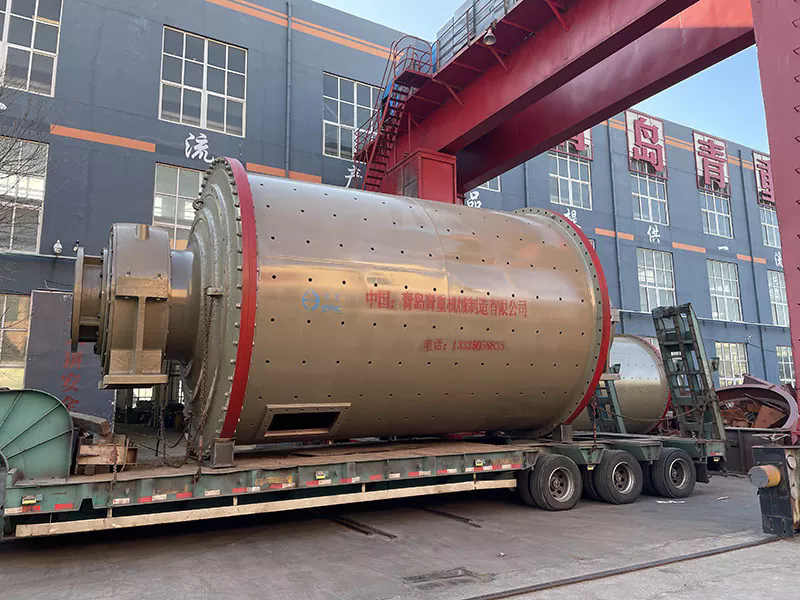
This article explains the operating mechanism, key components, selection considerations, application benefits, and maintenance strategies of a Ball Mill Grinder. It also introduces how Neizhiwai provides reliable grinding solutions designed to support different industrial production requirements.
Table of Contents
- 1. Outline of Ball Mill Grinder Technology
- 2. How Does a Ball Mill Grinder Work?
- 3. What Are the Main Components of a Ball Mill Grinder?
- 4. Why Choose a Ball Mill Grinder for Industrial Production?
- 5. How to Select the Right Ball Mill Grinder?
- 6. Industrial Applications of Ball Mill Grinder
- 7. Maintenance Methods for Better Grinding Performance
- 8. Frequently Asked Questions
Outline of Ball Mill Grinder Technology
Modern industries require efficient grinding equipment that can process different materials while maintaining stable production capacity. A Ball Mill Grinder achieves this by combining mechanical rotation, grinding media movement, and continuous impact forces. The rotating cylindrical chamber allows steel balls or other grinding materials to repeatedly collide with the raw material, gradually reducing particle size.
Unlike simple crushing equipment, a ball mill grinder can provide both grinding and mixing functions. It is suitable for processing hard, abrasive, and brittle materials that require fine or ultra-fine particle sizes. The grinding process is based mainly on impact and friction generated by the movement of grinding media inside the rotating chamber. :contentReference[oaicite:0]{index=0}
How Does a Ball Mill Grinder Work?
The working principle of a Ball Mill Grinder is based on controlled mechanical energy transfer. During operation, the motor drives the cylinder to rotate at a specific speed. Grinding balls inside the cylinder are lifted along the inner wall and then fall due to gravity, creating strong impact and friction forces against the material.
The repeated movement creates two major grinding actions:
- Impact grinding: Large particles are broken when grinding balls fall from a height and strike the material.
- Attrition grinding: Continuous rubbing between balls and materials further reduces particle size.
The efficiency of the grinding process depends on several factors, including rotation speed, grinding media size, material characteristics, filling ratio, and grinding time. Proper adjustment of these parameters allows operators to achieve the required fineness while reducing unnecessary energy consumption. :contentReference[oaicite:1]{index=1}
| Working Factor | Function | Impact on Performance |
|---|---|---|
| Rotation Speed | Controls movement pattern of grinding media | Affects grinding efficiency and energy usage |
| Grinding Media Size | Provides impact and friction force | Determines grinding capacity and final particle size |
| Material Loading | Controls the amount of material inside the chamber | Influences production stability |
| Grinding Time | Defines processing duration | Controls final powder fineness |
What Are the Main Components of a Ball Mill Grinder?
A reliable Ball Mill Grinder consists of several important components that work together to provide stable grinding performance. Understanding these parts helps users select suitable equipment and reduce unexpected downtime.
| Component | Description | Purpose |
|---|---|---|
| Rotating Cylinder | Main grinding chamber that rotates during operation | Creates movement for grinding media |
| Grinding Media | Steel balls, ceramic balls, or specialized materials | Transfers energy to break down materials |
| Liner System | Wear-resistant protective layer inside the cylinder | Reduces wear and improves grinding movement |
| Drive System | Motor, reducer, and transmission structure | Provides stable rotational power |
| Feeding and Discharge System | Controls material input and output | Supports continuous production |
The quality of each component directly affects equipment lifespan. For example, wear-resistant liners help protect the internal structure, while optimized transmission systems improve operating stability.
Why Choose a Ball Mill Grinder for Industrial Production?
Many manufacturers face challenges including inconsistent particle size, high operating costs, and equipment reliability problems. A Ball Mill Grinder provides practical solutions by offering flexible operation and strong adaptability.
- High grinding capability: Suitable for processing various hard materials.
- Stable particle size control: Produces uniform powder for downstream processes.
- Wide application range: Works in mining, construction materials, chemical industries, and manufacturing.
- Continuous operation: Supports large-scale industrial production.
- Flexible grinding methods: Can perform dry or wet grinding according to production requirements.
For companies requiring dependable grinding equipment, Neizhiwai focuses on providing practical Ball Mill Grinder solutions that balance efficiency, durability, and production requirements.
How to Select the Right Ball Mill Grinder?
Choosing the correct Ball Mill Grinder is an important decision for improving production efficiency and reducing long-term operating costs. Different industries process different materials, and each production line has unique requirements regarding capacity, particle size, energy consumption, and operating conditions.
Before purchasing grinding equipment, manufacturers should carefully evaluate several key factors. Selecting unsuitable equipment may lead to low grinding efficiency, excessive maintenance costs, and unstable product quality.
| Selection Factor | Key Consideration | Why It Matters |
|---|---|---|
| Material Characteristics | Hardness, moisture content, abrasiveness, and chemical properties | Determines suitable grinding method and equipment configuration |
| Production Capacity | Required output per hour or per day | Ensures the equipment matches production targets |
| Final Particle Size | Required powder fineness | Affects grinding time and media selection |
| Energy Consumption | Motor power and operating efficiency | Helps reduce production expenses |
| Maintenance Requirements | Wear parts availability and service convenience | Improves equipment reliability |
A professional equipment supplier can help analyze production conditions and recommend a suitable configuration. Factors such as cylinder size, drive system design, liner material, and grinding media selection should be considered together rather than individually.
Neizhiwai understands that every industrial project has different challenges. By focusing on practical application requirements, the company provides Ball Mill Grinder solutions designed to support stable operation and efficient material processing.
Industrial Applications of Ball Mill Grinder
The versatility of a Ball Mill Grinder allows it to be used across many industries. Its ability to produce fine and consistent powders makes it an essential machine for material preparation and processing.
| Industry | Common Materials | Grinding Purpose |
|---|---|---|
| Mining Industry | Metal ores, minerals, and rocks | Prepare materials for mineral separation and further processing |
| Cement Industry | Clinker, limestone, and additives | Create fine powder for cement production |
| Ceramic Industry | Clay, feldspar, and ceramic materials | Improve material uniformity and quality |
| Chemical Industry | Chemical compounds and industrial minerals | Achieve required particle size for processing |
| Building Materials | Sand, gypsum, and other materials | Enhance product performance and consistency |
In mining operations, grinding efficiency directly affects the following separation processes. In cement manufacturing, stable grinding performance influences product quality and production costs. For ceramic and chemical industries, precise particle size control is essential for achieving consistent final products.
Because of its adaptability, a Ball Mill Grinder remains an important solution for businesses looking to improve material processing capability while maintaining operational flexibility.
Maintenance Methods for Better Grinding Performance
Regular maintenance is essential for extending the service life of a Ball Mill Grinder. Even high-quality equipment requires proper inspection and care to maintain reliable performance.
- Inspect grinding media regularly: Worn or damaged grinding balls should be replaced to maintain effective impact force.
- Check liner conditions: The liner protects the cylinder and should be examined for excessive wear.
- Monitor lubrication systems: Proper lubrication reduces friction and protects moving components.
- Maintain stable feeding: Overloading or insufficient material feeding can reduce grinding efficiency.
- Check motor and transmission parts: Early detection of abnormal noise or vibration prevents major failures.
| Maintenance Frequency | Recommended Inspection |
|---|---|
| Daily | Check operating sound, temperature, lubrication, and material flow |
| Weekly | Inspect wear conditions and fastening components |
| Monthly | Review motor performance and transmission system |
| Long-Term Service | Replace worn parts and perform comprehensive equipment evaluation |
A preventive maintenance plan helps avoid unexpected shutdowns and improves overall production efficiency. Companies that properly maintain their grinding equipment can achieve longer equipment life and better return on investment.
Frequently Asked Questions About Ball Mill Grinder
What materials can a Ball Mill Grinder process?
A Ball Mill Grinder can process many types of materials, including minerals, ores, cement raw materials, ceramics, chemicals, and other industrial substances. The suitable configuration depends on material hardness, moisture, and required final particle size.
What is the difference between dry grinding and wet grinding?
Dry grinding processes materials without adding liquid, making it suitable for applications where moisture must be avoided. Wet grinding uses liquid during processing, which can improve grinding efficiency for certain materials and help achieve finer particle sizes.
How can a Ball Mill Grinder reduce production costs?
A properly selected and maintained Ball Mill Grinder can reduce costs through stable operation, efficient material processing, reduced downtime, and longer component service life. Optimized grinding parameters also help lower unnecessary energy consumption.
How long does a Ball Mill Grinder usually operate?
The service life depends on equipment quality, operating conditions, maintenance practices, and material characteristics. Regular inspections, proper lubrication, and timely replacement of wear parts can significantly extend operational life.
Why is choosing the right supplier important?
A reliable supplier provides not only equipment but also technical guidance, configuration recommendations, and after-sales support. Professional assistance helps ensure that the grinding system matches actual production needs.
Conclusion: How Does a Ball Mill Grinder Support Modern Industrial Production?
A Ball Mill Grinder plays an essential role in modern material processing by providing efficient grinding, reliable performance, and flexible application possibilities. From mining and cement manufacturing to chemical and ceramic industries, this equipment helps companies achieve consistent product quality and improve production efficiency.
However, the best grinding results depend on selecting suitable equipment, optimizing operating parameters, and maintaining the machine properly. Understanding material characteristics and production requirements allows businesses to maximize the value of their investment.
Neizhiwai is committed to delivering dependable Ball Mill Grinder solutions that address industrial grinding challenges through efficient design, stable performance, and professional support. If you are searching for a suitable grinding solution to improve your production process, please contact us today for more information and customized assistance.