

How Can Manufacturers Reduce Warpage During the Injection Molding of PP Plastic Storage Injection Molding Bucket Production
2026-05-25
Warpage is one of the most persistent quality defects in the production of PP Plastic Storage Injection Molding Bucket units. For manufacturers like Manatee, addressing warpage directly improves dimensional accuracy, stacking performance, and customer satisfaction. Polypropylene’s semi-crystalline nature and shrinkage behavior make it particularly prone to uneven cooling and internal stress. Below is a professional framework for reducing warpage through process, design, and material control.
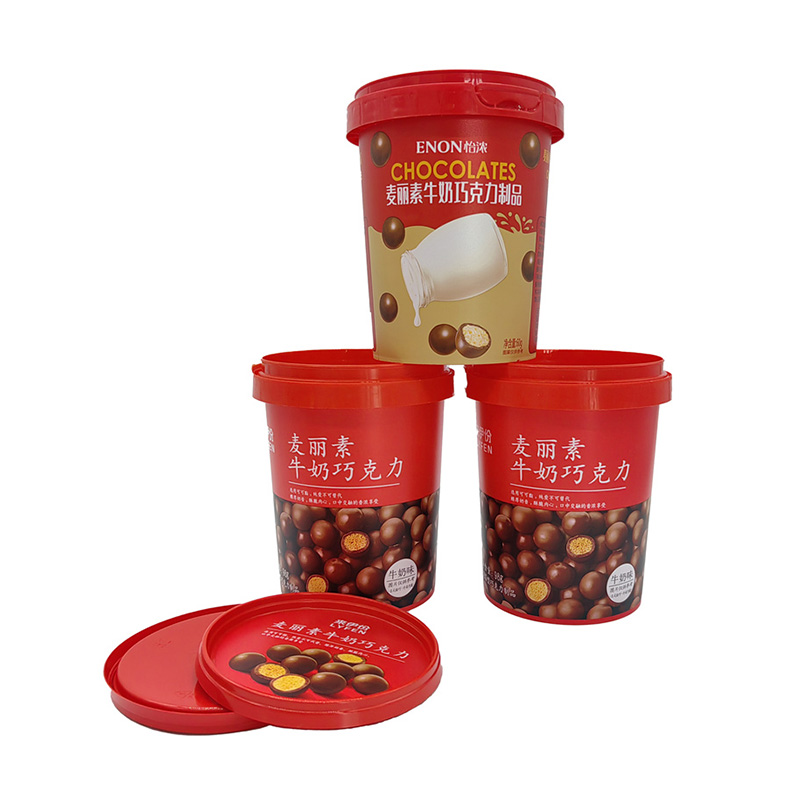
Critical Parameters to Control
| Parameter | Effect on Warpage | Recommended Range for PP Plastic Storage Injection Molding Bucket |
|---|---|---|
| Melt temperature | Affects viscosity and orientation | 200–230°C |
| Mold temperature | Influences cooling uniformity | 30–50°C (water-cooled) |
| Injection pressure | Creates residual stress | 40–70 MPa |
| Packing pressure | Compensates shrinkage | 50–80% of injection pressure |
| Cooling time | Determines solidification gradient | 15–30 seconds per 1 mm wall thickness |
Five Practical Methods to Reduce Warpage
1. Optimize Wall Thickness Uniformity
Design the PP Plastic Storage Injection Molding Bucket with consistent wall sections (2.5–3.5 mm). Thick-to-thin transitions create differential shrinkage. Manatee uses flow simulation to identify hotspots before mold fabrication.
2. Control Mold Cooling Circuit Layout
Conformal cooling channels near the rim and base reduce thermal gradients. Poor cooling at the bucket rim often causes ovality. A balanced circuit lowers cycle time and warpage by 30–40%.
3. Adjust Packing and Holding Phases
Increase holding pressure during gate sealing. For large PP Plastic Storage Injection Molding Bucket bodies, two-stage packing (high pressure for 3–5 seconds, then low pressure) minimizes sink marks and twist.
4. Use Nucleating Agents
Add α-nucleating agents to PP resin. These promote smaller, more uniform spherulites, reducing anisotropic shrinkage. Manatee has verified that 0.2–0.5% nucleating agent lowers warpage by up to 25%.
5. Implement Annealing (Post-Mold Treatment)
Place freshly molded buckets on a cooling jig for 10–15 minutes. This stress-relief step is especially effective for stackable PP Plastic Storage Injection Molding Bucket designs with undercuts or handle attachments.
PP Plastic Storage Injection Molding Bucket FAQ – Common Questions from Manufacturers
What is the most common cause of warpage in PP plastic storage buckets during injection molding?
The most common cause is non-uniform cooling across the bucket wall. PP has a high coefficient of thermal expansion and crystallizes at different rates depending on local temperature. When the rim cools faster than the base or one side of the bucket cools slower than the opposite side, internal stresses build up. Upon ejection, the part distorts to relieve these stresses. This is especially problematic for tall PP Plastic Storage Injection Molding Bucket designs where core-cavity temperature differences exceed 15°C. Solutions include balancing coolant flow rates and adding baffles to the mold’s core.
How does injection speed influence warpage in PP plastic storage buckets?
Injection speed directly affects molecular orientation. High injection speed (above 80 mm/s) aligns PP polymer chains in the flow direction, causing anisotropic shrinkage – the bucket shrinks more in the transverse direction than in the flow direction. This leads to elliptical deformation. Low injection speed (below 30 mm/s) may cause premature freeze-off and incomplete packing. Manatee recommends a medium speed of 45–60 mm/s combined with a gradual velocity profile. A multi-stage injection profile (slow-fast-slow) reduces flow-induced residual stress and improves dimensional stability in PP Plastic Storage Injection Molding Bucket production.
Can mold material choice help reduce warpage in PP plastic storage injection molding buckets?
Yes. Mold materials with high thermal conductivity, such as P20 tool steel with copper alloy inserts or beryllium-free mold alloys, can reduce warpage by equalizing cooling rates. Standard P20 steel has a thermal conductivity of ~30 W/m·K, while aluminum molds (120–160 W/m·K) provide faster, more uniform heat extraction. However, aluminum may lack wear resistance for high-volume PP Plastic Storage Injection Molding Bucket production. Manatee uses a hybrid approach: steel cavities with conformal cooling channels fabricated via additive manufacturing. This combination achieves uniform cooling while maintaining abrasion resistance for long production runs.
Conclusion and Call to Action
Controlling warpage in PP Plastic Storage Injection Molding Bucket manufacturing requires systematic attention to mold cooling, wall design, and process parameters. Manatee integrates simulation-driven mold design and scientific molding principles to deliver buckets with less than 0.5 mm deviation on 300 mm diameters. Contact us today for a warpage analysis of your existing molds or to request a sample of our low-warpage PP Plastic Storage Injection Molding Bucket solutions. Let Manatee help you improve your production yield and part quality.