

How Can Flat Rack Containers Solve Oversized Cargo Transportation Challenges?
2026-07-07
Article Summary
Transporting oversized, heavy, and irregularly shaped cargo has always been a major challenge for global logistics companies, manufacturers, and project contractors. Traditional shipping containers often cannot accommodate machinery, steel structures, industrial equipment, or large components that exceed standard container dimensions. Flat Rack Containers provide a practical solution by offering an open design, strong loading capacity, and flexible cargo handling options.
This article explains how Flat Rack Containers help businesses overcome transportation difficulties, improve logistics efficiency, reduce operational risks, and create more reliable supply chain solutions. It also explores key selection factors, applications, benefits, and common questions to help customers make better purchasing decisions.
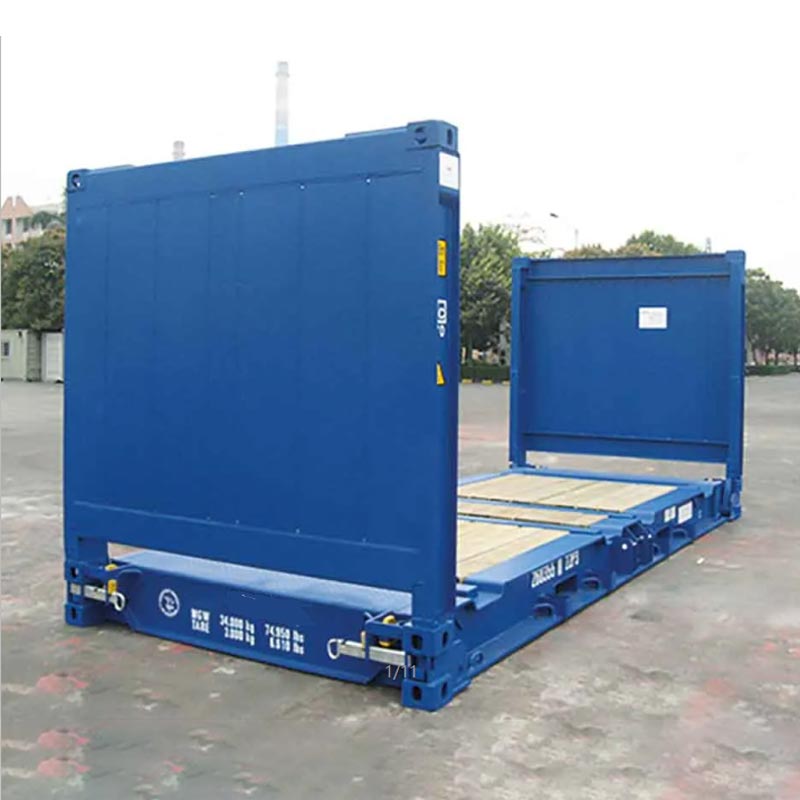
Table of Contents
- What Is a Flat Rack Container?
- Why Do Businesses Need Flat Rack Containers?
- What Advantages Do Flat Rack Containers Provide?
- Where Are Flat Rack Containers Commonly Used?
- How to Choose the Right Flat Rack Container?
- Flat Rack Container vs Standard Container
- How to Maintain Flat Rack Containers for Long-Term Use?
- Frequently Asked Questions About Flat Rack Containers
Article Outline
- Understanding the structure and function of Flat Rack Containers
- Identifying transportation problems solved by Flat Rack Containers
- Exploring performance advantages and industrial applications
- Choosing suitable Flat Rack Containers according to cargo requirements
- Learning maintenance methods and purchasing considerations
- Answering common customer questions
What Is a Flat Rack Container?
A Flat Rack Container is a specialized shipping container designed for transporting oversized, heavy, or unusually shaped cargo that cannot fit into traditional enclosed containers. Unlike standard containers with four walls and a roof, Flat Rack Containers usually feature a flat platform structure with collapsible or fixed end walls, allowing cargo to extend beyond normal container dimensions.
The main purpose of this container type is to provide flexibility while maintaining safe transportation standards. Its reinforced structure allows it to carry heavy machinery, construction equipment, industrial components, and other large cargo items that require special handling.
A high-quality Flat Rack Container typically includes:
| Component | Function |
|---|---|
| Strong steel frame | Provides excellent structural stability and supports heavy loads |
| Reinforced floor | Handles concentrated cargo weight and impact during transportation |
| Corner fittings | Allows secure stacking and connection with transportation equipment |
| Foldable end walls | Improves storage efficiency and simplifies return transportation |
For companies dealing with complex logistics requirements, Flat Rack Containers offer a reliable way to transport cargo that requires more space and stronger support than conventional containers can provide.
Why Do Businesses Need Flat Rack Containers?
Many industries face difficulties when transporting oversized products internationally. Standard containers are designed for general cargo, but they have strict internal dimensions that limit the types of products they can carry.
Common transportation challenges include:
- Oversized equipment exceeding standard container height or width
- Heavy cargo creating excessive pressure on container floors
- Complex loading requirements requiring crane operations
- Higher transportation costs caused by inefficient packaging
- Safety risks during long-distance shipping
Flat Rack Containers solve these problems by providing open access from multiple directions. Cargo can be loaded from the top or sides using cranes and lifting equipment, making them ideal for products that cannot be moved through traditional container doors.
For example, industrial manufacturers exporting large machines often need customized logistics solutions. A Flat Rack Container enables safer transportation without requiring extensive disassembly of equipment, helping reduce preparation time and labor costs.
What Advantages Do Flat Rack Containers Provide?
Choosing the right transportation equipment directly affects logistics efficiency and cargo safety. Flat Rack Containers provide several important advantages for global shipping operations.
| Advantage | Customer Benefit |
|---|---|
| Large loading capacity | Suitable for heavy machinery, steel products, and oversized cargo |
| Flexible loading methods | Allows side loading, top loading, and easier cargo positioning |
| Durable construction | Provides long service life in demanding transportation environments |
| International compatibility | Works efficiently with ships, trucks, and railway transportation systems |
| Space optimization | Helps reduce unnecessary cargo separation and packaging costs |
Another important advantage is adaptability. Different industries have different cargo requirements, and Flat Rack Containers can be designed with various dimensions, load capacities, and structural configurations to meet specific transportation needs.
Container Family (Qingdao) Intelligent Technology Co., Ltd. focuses on providing professional container solutions that support customers with reliable manufacturing capabilities, practical designs, and customized options for different logistics applications.
Where Are Flat Rack Containers Commonly Used?
Flat Rack Containers are widely used across multiple industries because of their strong structure and flexible design.
| Industry | Typical Cargo |
|---|---|
| Construction | Steel structures, construction machinery, prefabricated components |
| Energy | Power equipment, turbines, large industrial components |
| Manufacturing | CNC machines, production equipment, factory systems |
| Shipbuilding | Large mechanical parts and marine equipment |
| Infrastructure Projects | Bridges, pipelines, engineering materials |
For international engineering projects, transportation flexibility is especially important. Flat Rack Containers allow project teams to move large components between countries while maintaining better control over delivery schedules and cargo protection.
How to Choose the Right Flat Rack Container?
Selecting a suitable Flat Rack Container requires careful evaluation of cargo characteristics, transportation conditions, and operational requirements.
- Cargo weight: Confirm the maximum payload capacity before selecting a container.
- Cargo dimensions: Measure length, width, and height to ensure proper compatibility.
- Loading method: Consider whether the cargo requires crane loading or side access.
- Transportation environment: Choose materials and protection levels suitable for different climates.
- Customization needs: Determine whether special structures or reinforced designs are required.
Working with an experienced manufacturer helps customers avoid unsuitable purchases and ensures the container matches actual transportation conditions.
Flat Rack Container vs Standard Container
| Feature | Flat Rack Container | Standard Container |
|---|---|---|
| Structure | Open platform with reinforced frame | Fully enclosed box structure |
| Cargo Type | Oversized and irregular cargo | General packaged goods |
| Loading Method | Top, side, and crane loading available | Mainly door loading |
| Flexibility | High flexibility for special cargo | Limited by internal dimensions |
While standard containers remain suitable for everyday shipping, Flat Rack Containers are the preferred option when cargo size, weight, or shape creates transportation limitations.
How to Maintain Flat Rack Containers for Long-Term Use?
Proper maintenance extends service life and ensures safe transportation performance. Although Flat Rack Containers are built for harsh environments, regular inspection is still necessary.
- Inspect steel structures regularly for corrosion or damage.
- Check corner fittings and locking components before use.
- Clean surfaces after exposure to saltwater or harsh environments.
- Repair damaged coatings to prevent rust development.
- Perform load inspections before transporting heavy cargo.
A well-maintained Flat Rack Container can provide reliable performance for many years, reducing replacement costs and improving operational efficiency.
Frequently Asked Questions About Flat Rack Containers
What cargo can be transported in a Flat Rack Container?
Flat Rack Containers are suitable for oversized machinery, heavy equipment, steel structures, industrial components, and other cargo that cannot fit into standard containers.
Can Flat Rack Containers be customized?
Yes. Manufacturers can provide customized solutions according to cargo dimensions, weight requirements, loading methods, and transportation conditions.
Are Flat Rack Containers suitable for international shipping?
Yes. They are widely used in global shipping systems and can work with different transportation methods including sea, rail, and road logistics.
Why choose a professional Flat Rack Container manufacturer?
Professional manufacturers provide better quality control, structural reliability, customization support, and technical assistance to ensure transportation safety.
Conclusion
Flat Rack Containers provide an effective solution for companies facing oversized cargo transportation challenges. Their strong structure, flexible loading capability, and wide application range make them an essential choice for modern logistics and industrial transportation.
By selecting the right container design and working with an experienced supplier, businesses can improve transportation efficiency, reduce risks, and achieve more reliable global cargo movement. Container Family (Qingdao) Intelligent Technology Co., Ltd. delivers professional Flat Rack Container solutions designed to meet diverse customer requirements.
If you are looking for durable, flexible, and customized Flat Rack Container solutions for your transportation needs, please contact us today. Our professional team is ready to provide reliable products and support your global logistics projects.