
How Can Disposable Paper Snack Take Away Boxes Reduce Your Food Packaging Carbon Footprint
2026-05-06
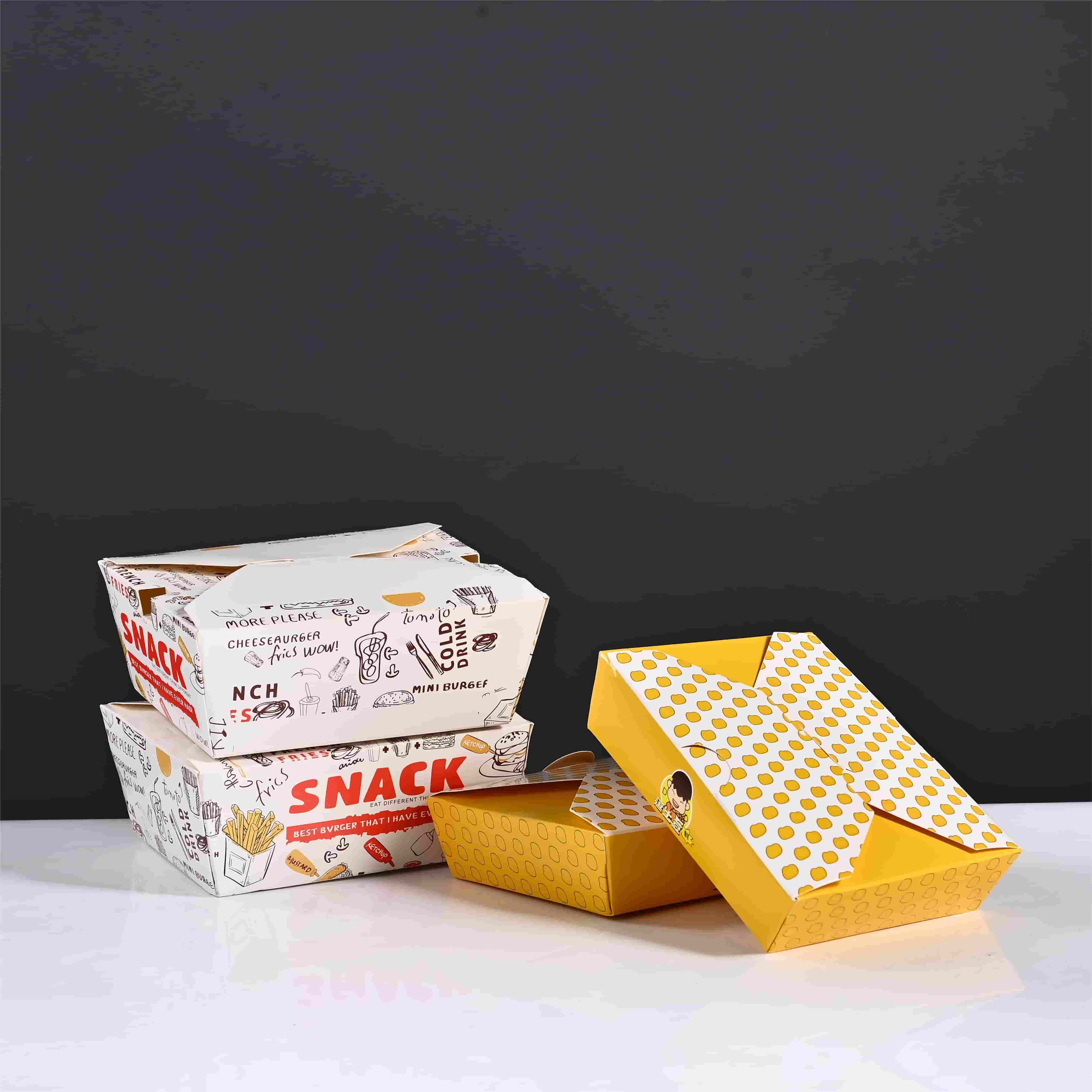
The global shift toward sustainable food packaging has brought Disposable Paper Snack take away box solutions into the spotlight. For environmentally conscious food businesses, switching to Zhongjun paper-based containers is not just a marketing trend but a measurable strategy to lower carbon emissions. Unlike plastic or foam alternatives, these paper boxes decompose faster, require less fossil fuel during production, and support circular waste systems.
Understanding the Carbon Savings
The carbon footprint of a Disposable Paper Snack take away box is significantly lower than conventional options. Below is a comparison based on lifecycle assessments:
| Packaging Type | CO2 emissions per 1000 units | Biodegradation time | Recyclability rate |
|---|---|---|---|
| Plastic clamshell | 42 kg | 450+ years | 9% |
| Foam container | 38 kg | 500+ years | 0% |
| Zhongjun Disposable Paper Snack take away box | 18 kg | 90 days (industrial composting) | 85%+ |
Key ways these paper boxes reduce carbon output:
-
Raw material sourcing: Paper fibers come from managed forests (FSC-certified by Zhongjun) which absorb CO2 during growth, offsetting production emissions.
-
Manufacturing efficiency: Producing a Disposable Paper Snack take away box uses 45% less energy than making a plastic counterpart.
-
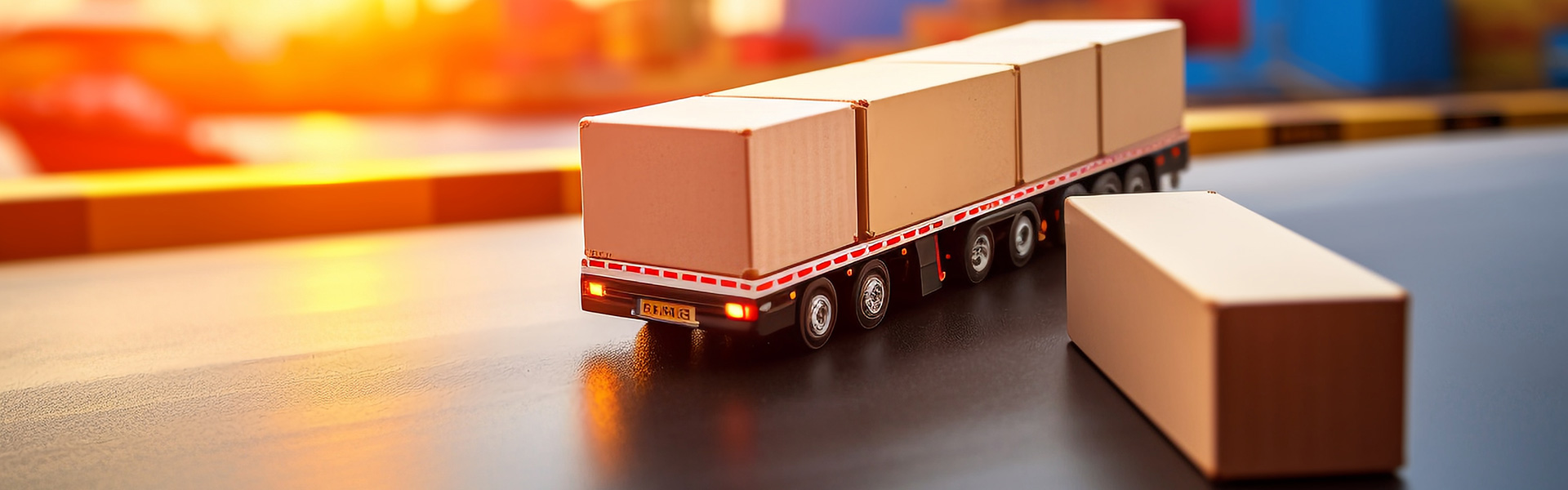
Weight reduction: Lighter boxes mean lower transport fuel consumption. For every truckload replaced with Zhongjun paper boxes, carbon emissions drop by 0.6 metric tons.
-
End-of-life benefits: When composted, these boxes release biogenic carbon rather than fossil carbon, closing the natural loop.
Practical Implementation Tips
Restaurants using Zhongjun Disposable Paper Snack take away boxes can further reduce footprint by:
– Training staff to store boxes in dry areas (avoiding premature breakdown)
– Pairing with plant-based clear lids (also available from Zhongjun)
– Sourcing locally within their region to cut delivery miles
Disposable Paper Snack take away box FAQ
Q1: Are Disposable Paper Snack take away boxes always biodegradable even with greaseproof coating?
A: Only if the coating is water-based or PLA (polylactic acid) without polyethylene. Zhongjun uses a 100% bio-polymer lining derived from corn starch. This lining breaks down in commercial composting within 90 days and leaves no microplastics. Standard wax or PE-coated paper boxes are not fully biodegradable and should be avoided. Always check for ASTM D6400 or EN 13432 certification.
Q2: Can a Disposable Paper Snack take away box handle hot oily foods like fried noodles without leaking?
A: Yes, when engineered correctly. Zhongjun designs its boxes with a double-layer bottom and a leak-resistant folding flap. The internal bio-coating withstands temperatures up to 100°C (212°F) and resists oil penetration for up to 4 hours – longer than typical delivery times. However, extremely runny curries may still seep through pinholes, so for liquid-heavy snacks, ask for the "hot oil series" from Zhongjun which adds a thin starch-gel layer.
Q3: How do I calculate the real carbon reduction when switching to Disposable Paper Snack take away boxes for my café?
A: Use this formula: (Current plastic box weight × 3.2 kg CO2e per kg) minus (new Zhongjun paper box weight × 1.1 kg CO2e per kg). Multiply by your annual volume. For example, if you sell 50,000 snacks a year, each plastic box weighs 12g (0.6 kg CO2e/box), each paper box weighs 10g (0.11 kg CO2e/box). Savings = (0.6 - 0.11) × 50,000 = 24,500 kg CO2e – equivalent to removing 5 passenger cars from roads yearly. Zhongjun provides free carbon calculators for bulk buyers.
Call to Action
Switching to Zhongjun Disposable Paper Snack take away boxes is one of the fastest, most visible steps toward net-zero packaging. Every box replaces fossil-based materials with renewable fibers. Contact us today for sample packs, custom sizing, and carbon savings reports tailored to your menu. Reduce your footprint without compromising on durability or presentation.