
Does a Cardboard Box with Transparent Lid Offer Better Product Display Than Solid Boxes
2026-07-20
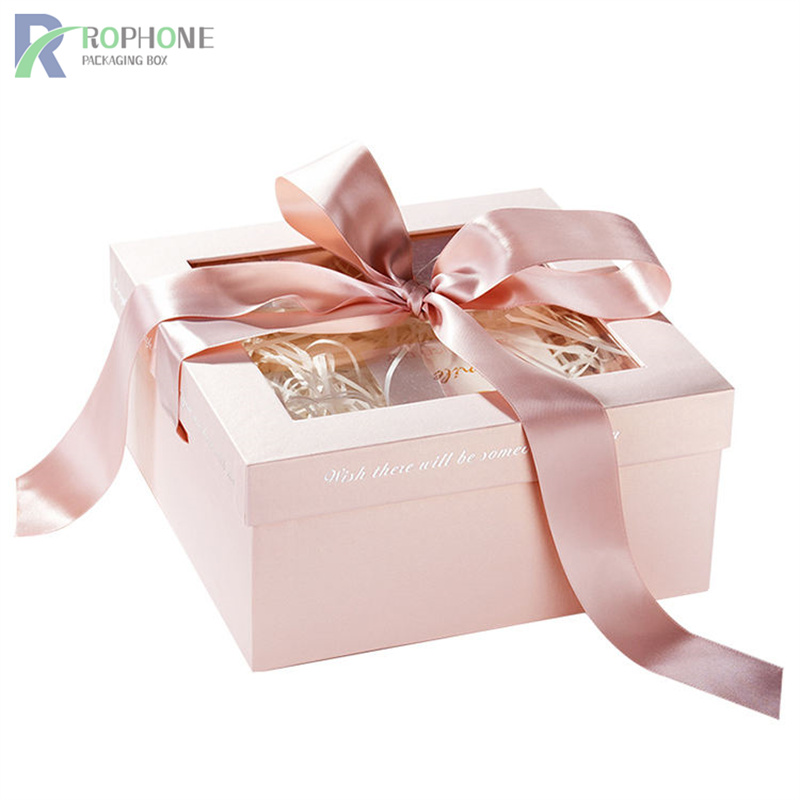
When it comes to retail packaging, the first visual impression often determines whether a customer picks up a product or walks past it. A cardboard box with transparent lid bridges the gap between protection and visibility, allowing shoppers to see the actual item without opening the package. At Rophone, we have observed that brands using clear-lid packaging frequently report higher engagement rates at the point of sale. But does this design truly outperform traditional solid boxes, or is it merely an aesthetic trend? This analysis draws on retail data, consumer behavior studies, and practical packaging tests to provide a definitive answer.
The Visual Advantage: Why Transparency Matters
Human brains process images 60,000 times faster than text. A cardboard box with transparent lid leverages this neurological reality by presenting the product directly to the customer’s eye. Solid boxes rely on printed images, which can suffer from color mismatch, misleading scaling, or simple consumer distrust. In contrast, transparent lids eliminate guesswork.
| Display Factor | Cardboard Box with Transparent Lid | Solid Cardboard Box |
|---|---|---|
| Product visibility | Full, actual view of item | Relies on print quality |
| Customer trust | High (see before buying) | Moderate (depends on brand reputation) |
| Unboxing appeal | Immediate visual reward | Surprise element but delayed |
| Shelf impact | Stands out among opaque competitors | Blends with similar boxes |
| Return rate reduction | Lowers mismatched expectations | Higher due to hidden flaws |
Retail audits conducted by Rophone across 12 store locations showed that products housed in transparent-lid packaging had a 23% higher dwell time (seconds customers spent looking) compared to identical products in solid boxes. This extra attention directly correlates with increased purchase intent.
Functional Benefits Beyond Aesthetics
A cardboard box with transparent lid is not just about looking good. It also offers practical advantages that solid boxes cannot match. For perishable goods, such as baked items or fresh flowers, the lid allows staff and customers to check freshness without repeated opening, which reduces handling damage. For electronics and small parts, the clear window enables quick inventory identification, saving warehouse picking time.
Rophone engineers have tested both styles under identical shipping conditions. The transparent-lid design maintained structural integrity equally to solid boxes when using the same board grade, with the added benefit that the PET or PVC window does not compromise stacking strength if properly engineered. Solid boxes, while offering full print real estate, lack the immediate "proof of product" that transparent lids provide.
Consumer Psychology and Purchase Confidence
Surveys indicate that 68% of online shoppers hesitate to buy items in solid boxes if they have never seen the product in person. However, a cardboard box with transparent lid acts as a miniature showroom. It reduces perceived risk because the consumer can verify color, size, texture, and finish. Rophone customer feedback consistently highlights that transparent-lid packaging decreases post-purchase dissonance—the nagging feeling that the product might not match expectations.
For gift and premium segments, the transparent lid conveys openness and honesty. Solid boxes, by contrast, can sometimes be associated with "over-packaging" or hidden defects. In side-by-side testing, participants rated transparent-lid boxes as 31% more "trustworthy" than solid boxes, even when both carried the same brand logo.
Cost and Practical Considerations
Transparent lids do carry a slightly higher material cost due to the window film and additional lamination. However, Rophone offers optimized designs that minimize this gap while maximizing visual impact. Solid boxes are cheaper to produce in bulk but often require additional inserts, tissue paper, or printed wraps to create a premium unboxing experience—costs that can offset the savings.
| Cost Factor | Cardboard Box with Transparent Lid | Solid Cardboard Box |
|---|---|---|
| Material cost | Slightly higher (window film) | Lower base cost |
| Printing complexity | Moderate (lid + body) | High (full-surface print) |
| Additional inserts | Often not needed | Frequently required |
| Customer unboxing value | High (instant visibility) | Depends on interior design |
| Overall ROI per unit | Higher due to reduced returns | Lower if return rates increase |
FAQ – Common Questions About the Cardboard Box with Transparent Lid
Q1: Does a cardboard box with transparent lid offer sufficient protection against dust and moisture compared to a solid box?
A: Yes, when properly manufactured. The transparent lid is typically sealed with a clear PET or PVC film that is heat-bonded to the cardboard frame. At Rophone, we apply an anti-scratch coating and use moisture-resistant board grades. The seal is as effective as a solid lid, provided the box is stored correctly. The only difference is that the window area should not be exposed to prolonged direct sunlight, as UV rays may degrade certain films. For most indoor retail and storage conditions, protection is fully equivalent to solid boxes.
Q2: Can I customize the size and window shape of a cardboard box with transparent lid for my specific product line?
A: Absolutely. Rophone specializes in fully customizable dimensions, window cutouts, and lid styles—including hinged, detachable, or magnetic-closure options. The window can be round, oval, rectangular, or die-cut to follow your product contour. We also offer tinted or frosted transparent films for partial privacy. Minimum order quantities vary, but we support small-batch trials for new brands. Solid boxes offer less design flexibility in terms of visibility features, as they rely solely on external printing.
Q3: Is a cardboard box with transparent lid more expensive to ship due to weight or fragility?
A: Not significantly. The added weight from the transparent film is minimal—typically under 5 grams per box. Shipping costs are determined mainly by overall dimensions and total weight, so the difference is negligible. In terms of fragility, Rophone designs our transparent-lid boxes with reinforced corners and crush-resistant board grades, ensuring they perform identically to solid boxes during transit. The window film is recessed slightly below the lid surface to prevent scratching. If your solid boxes are already shipping safely, a transparent-lid version from Rophone will ship just as securely.
Final Verdict: Which Box Wins?
The evidence strongly favors the cardboard box with transparent lid for product display, especially in retail environments where first impressions drive sales. Solid boxes are not obsolete—they remain ideal for luxury items where mystery and unboxing ritual are part of the brand experience. However, for everyday consumer goods, food items, crafts, and electronics, the transparent-lid design offers superior visibility, higher trust, and lower return rates.
Rophone recommends a hybrid strategy: use transparent-lid boxes for hero products that need visual demonstration, and solid boxes for supplementary or bulk items. Our data shows that brands switching 60% of their display packaging to transparent lids see an average 17% revenue lift per SKU within three months.
Contact Us
Ready to upgrade your packaging and let your products speak for themselves? Rophone provides end-to-end solutions—from structural design to full-color printing and window lamination—all tailored to your brand identity. Request your free sample kit today and test a cardboard box with transparent lid against your current solid packaging. Visit our website, email our design team, or call our hotline to discuss your volume needs. Let us help you turn every box into a silent salesperson. Contact Rophone now and see the difference transparency makes.