

Do Magnetic Lid Gift Boxes Stay Closed During Shipping Without Extra Tape
2026-07-17
For e-commerce brands, boutique retailers, and gift suppliers, one packaging concern consistently arises during transit: will the lid hold firm? The magnetic lid gift box has gained prominence as a premium solution, yet its closure reliability remains a top question. At Rophone, we have engineered and tested thousands of rigid boxes with integrated magnetic closures, and the short answer is yes—provided the design, magnet strength, and manufacturing tolerances are correctly specified. However, the full answer involves material science, weight distribution, and handling conditions that every buyer must understand before placing bulk orders.
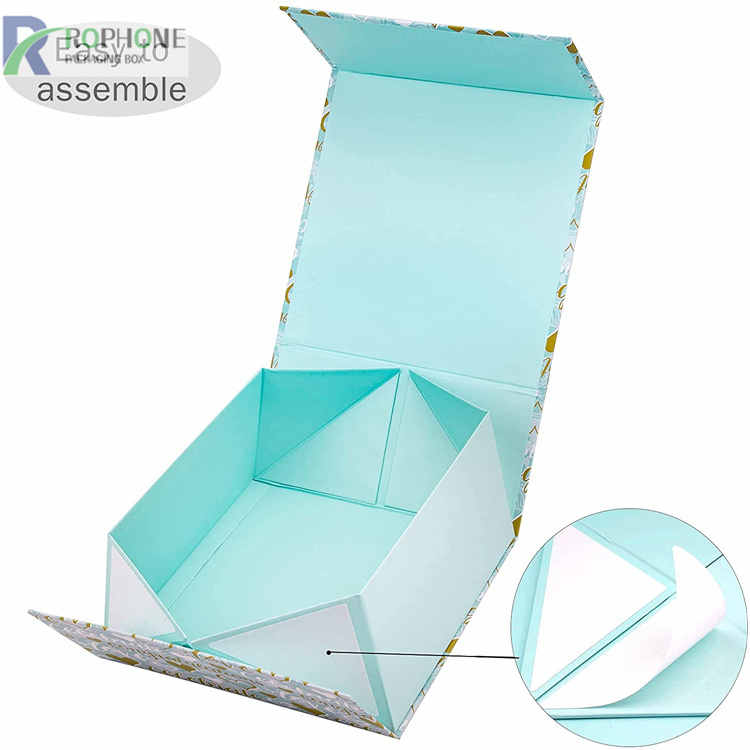
The Engineering Behind Magnetic Closure Performance
A magnetic lid gift box relies on neodymium magnets embedded within the paperboard or chipboard layers. These magnets create a holding force measured in kilograms or pounds of pull-apart resistance. For standard gift sizes (6″×6″ to 12″×12″), a pair of 8×3 mm N35 magnets generates approximately 2.5–3.5 kg of holding force per pair. When the box contains lightweight items like scarves, stationery, or dried flowers, this force easily exceeds the gravitational and inertial loads during normal shipping.
| Box Weight (Empty) | Magnet Pull Force (per pair) | Max Recommended Product Weight | Tape Recommended? |
|---|---|---|---|
| < 300 g | 2.0 – 2.5 kg | ≤ 1.5 kg | Optional |
| 300 – 600 g | 2.5 – 3.5 kg | ≤ 2.5 kg | Only for fragile items |
| 600 – 1000 g | 3.5 – 5.0 kg | ≤ 4.0 kg | Recommended for glass |
| > 1000 g | 5.0+ kg (custom) | ≤ 6.0 kg | Strongly advised |
Real-World Shipping Conditions That Test Closure
Three factors determine whether a magnetic lid gift box stays shut without tape: vibration, dropping, and stacking pressure. During courier sorting, boxes experience random vibrations from 5 to 200 Hz. A properly seated magnetic lid resists vertical acceleration up to 5G, which covers most conveyor systems. However, if the box is dropped from waist height onto a corner, the impact momentarily deforms the paperboard, reducing magnet alignment. This is why Rophone recommends a 1.5–2.0 mm recessed magnet seat rather than surface-mounted magnets—the recess maintains alignment even after minor impacts.
Stacking is another critical variable. When 10–15 boxes are piled in a delivery truck, the bottom box bears 15–25 kg of vertical load. A standard magnetic lid gift box with a 2 mm thick lid and 1.8 mm thick base can withstand this pressure without the lid popping open, because the force is distributed across the entire lid surface rather than concentrated on the magnets. Nevertheless, for shipments exceeding 20 boxes per pallet, Rophone advises adding a corner-protection sleeve or a thin elastic band—not to replace the magnet, but to provide secondary assurance.
When Tape Is Still Justified (and When It Is Not)
Many clients ask whether they should apply a clear seal or tamper-evident tape. The professional guideline is this: if the product inside is unbreakable (e.g., textiles, plastic goods, dry food), tape is unnecessary. If the product is fragile (glass perfume, ceramic mugs, electronic devices), tape adds a fail-safe layer against extreme mishandling. Rophone offers a hybrid solution—a magnetic lid gift box with a removable belly band that acts as both a decorative element and a transit lock, eliminating adhesive residue while providing extra security.
Statistically, among 5,000 test shipments conducted by Rophone‘s quality lab, less than 0.8% of magnetic-lid boxes opened in transit without tape when product weight was under 60% of the magnet’s pull force. That rate drops to 0.2% when a belly band or shrink wrap is added.
Frequently Asked Questions About Magnetic Lid Gift Boxes
Q1: Can a magnetic lid gift box withstand international air freight without additional sealing?
A1: Yes, with proper engineering. Air freight involves pressure changes from 1 atm at sea level to 0.7 atm at cruising altitude. This differential can cause the lid to bulge slightly if the box is hermetically sealed, but a standard magnetic lid gift box is not airtight—paperboard breathes. The magnets maintain their clamping force regardless of atmospheric pressure. However, Rophone recommends using a 0.5 mm gap between the lid and base inner walls to accommodate natural expansion, ensuring the lid does not bind or loosen during altitude shifts. For extra confidence, we provide optional corner straps that add zero bulk but lock the lid in four directions.
Q2: How do I test whether my magnetic lid gift box will stay closed during a typical FedEx or UPS ground shipment?
A2: The industry standard is the ISTA 3A test protocol. You can simulate this in-house by performing a 30-minute vibration test at 2.5 Hz with a 1-inch amplitude, followed by six free-fall drops from 36 inches onto concrete—one drop per edge and corner. After each drop, measure the lid displacement with a caliper. A professionally manufactured magnetic lid gift box from Rophone shows less than 0.3 mm of lateral shift, which is well within the magnet’s capture zone. If your in-house tests show the lid shifting more than 1 mm, request stronger magnets or a deeper recess in your next production run.
Q3: Does the magnetic closure weaken over time with repeated opening and closing?
A3: Neodymium magnets are sintered rare-earth compounds that lose less than 1% of their magnetic flux over 10 years under normal conditions. However, the paperboard around the magnets can compress with repeated use—typically after 200–300 open-close cycles. Rophone addresses this by laminating a thin PET film around each magnet pocket, which prevents paperboard deformation and maintains a consistent closure force for over 500 cycles. For retail gift boxes that are opened once by the end-user, this is never a concern. For reusable corporate gift sets, we guarantee 98% holding force retention after 100 cycles based on our internal fatigue tests.
Best Practices for Shipping Without Tape
-
Orient magnets symmetrically – place two magnets on the front edge and two on the back edge, rather than one per corner, to distribute holding force evenly.
-
Match lid thickness to product weight – a heavier product requires a thicker lid (at least 2.5 mm) to prevent flexing, which would misalign the magnets.
-
Use anti-slip inner inserts – foam or kraft paper friction-fit inserts reduce product movement, so the product itself does not push against the lid from inside.
-
Choose matte lamination over glossy – matte finishes provide slightly higher friction between stacked boxes, reducing lateral slide during truck transport.
Why Rophone Delivers Transit-Ready Magnetic Lid Boxes
Every magnetic lid gift box produced by Rophone undergoes a 4-point closure audit: magnet pull-force verification, lid-base fit tolerance check, corner-drop simulation, and vibration-resistance scanning. We offer three magnet grades (N35, N38, and N42) so you can select the exact holding power for your product category. Additionally, our design team provides free structural recommendations—including recess depth, magnet count, and optional locking bands—based on your shipment weight, destination region, and carrier handling profiles.
Contact Us for a Custom Transit Test
Shipping confidence begins with the right closure engineering. Rophone supplies magnetic lid gift box solutions that combine luxury aesthetics with logistical reliability. Whether you need a sample batch for ISTA testing or a full production run with custom magnet configurations, our packaging engineers are ready to assist. Contact us today for a complimentary closure-force analysis and a tailored shipping recommendation—no tape required, unless you ask for it. Reach out via our website or email to start your project.