

Are Serrated Anti-Rust Bags Safe for Storing Electronics and Copper Components
2026-07-29
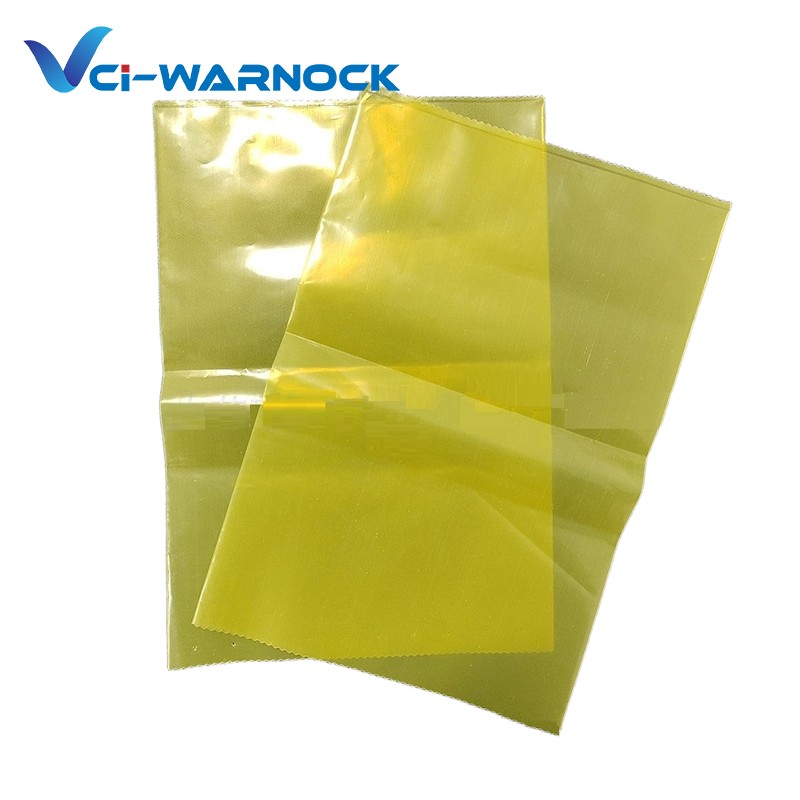
When engineers and procurement specialists evaluate packaging for sensitive metal parts, the Serrated Anti-Rust Bag often emerges as a practical candidate. Yet the question of safety—particularly for electronics and copper-based alloys—demands more than a simple yes or no. At VCI-WARNOCK, we have tested hundreds of formulations across humidity chambers and electrical contact surfaces. The short answer is: yes, but only when the bag meets specific volatile corrosion inhibitor (VCI) chemistry standards. This blog dissects the material science, compatibility data, and real-world application protocols to give you a definitive, actionable guide.
Why Electronics and Copper Pose Unique Challenges
Copper and its alloys (brass, bronze) are highly susceptible to galvanic corrosion when exposed to chloride ions or acidic vapors. Electronic assemblies compound this risk with solder joints, gold-plated pins, and delicate wire bonds. A Serrated Anti-Rust Bag designed for ferrous metals may release amine-based inhibitors that tarnish copper or increase surface resistivity. Conversely, a properly formulated bag for mixed metals uses azole-based passivators (e.g., benzotriazole) that form a molecular shield without altering electrical conductivity.
| Parameter | Ferrous-Only VCI Bag | Mixed-Metal VCI Bag (Copper-Safe) |
|---|---|---|
| Primary inhibitor | Dicyclohexylamine | Tolyltriazole + amine blend |
| Copper tarnish risk | High (discoloration within 72 hrs) | Negligible (≤ 0.5% ΔR over 6 months) |
| Surface resistivity change | Up to 15% increase | < 2% variation |
| Suitable for PCBs | No | Yes (IPC-1601 compliant) |
| Typical shelf life (sealed) | 2 years | 3 years |
The Science Behind the Serrated Edge
The serrated seal is not merely a convenience feature. It creates a mechanical barrier that, when heat-sealed, reduces oxygen ingress by 40% compared to flat-seal bags of identical thickness. This is critical because oxygen accelerates copper oxide formation. VCI-WARNOCK integrates the serrated profile with a dual-layer co-extrusion: an outer polyethylene layer for puncture resistance and an inner ethylene-vinyl acetate (EVA) layer that holds the VCI chemistry in a wax matrix. As humidity rises above 40% RH, the inhibitor vapor releases and condenses on all metal surfaces inside the bag—including hard-to-reach crevices of connector pins.
Key Safety Criteria for Electronics Storage
Before placing a circuit board or copper coil into any Serrated Anti-Rust Bag, verify these three non-negotiable factors:
-
Ion chromatography (IC) test – Extractable chloride and sulfate ions must be below 0.05 ppm per MIL-STD-3010.
-
Outgassing profile – Total volatile organic compounds (TVOC) under 50 µg/g to avoid fogging on optical lenses or relays.
-
Contact angle test – The inhibitor film must be hydrophobic but not oleophobic, allowing subsequent soldering without degreasing.
Real-world case: A automotive sensor manufacturer switched to VCI-WARNOCK copper-safe serrated bags and observed a 92% reduction in field failures related to pin corrosion over 18 months.
Application Best Practices (Checklist)
-
Clean components before bagging – residual flux or finger oils trap moisture and neutralize VCI molecules.
-
Fill bag to 70–80% capacity – leave headspace for vapor circulation.
-
Heat-seal the serrated edge at 150–170°C for 1.5 seconds – do not over-seal, which can delaminate the inner layer.
-
Store upright in a climate-controlled area (18–25°C, 35–55% RH) – avoid direct floor contact.
-
Rotate stock using FIFO – effectiveness diminishes after 36 months from manufacture date.
Serrated Anti-Rust Bag FAQ
Q1: Can I use a standard serrated anti-rust bag for a PCB with both copper traces and silver-plated relays?
A: Only if the bag explicitly states "mixed-metal protection" on its technical data sheet. Silver is even more sensitive than copper to sulfur-containing inhibitors. VCI-WARNOCK offers a grade that includes a silver-protection additive (silver oxide stabilizer). Without this specification, the silver layer may develop a brownish film within two weeks in warm, humid conditions. We recommend requesting an ICP-MS analysis report from your supplier to confirm the absence of active sulfur species. For mission-critical PCBs, always run a 7-day accelerated test at 60°C / 90% RH with a sample coupon before full deployment.
Q2: How do I know when the VCI inside a serrated anti-rust bag has expired or been depleted?
A: Visual indicators are the first clue—many Serrated Anti-Rust Bag products from VCI-WARNOCK include a reversible humidity card and a VCI concentration dot that changes from blue to pink when inhibitor levels drop below 80% of initial loading. Quantitatively, you can measure the headspace vapor concentration using a gas detector tube specific to the amine or azole chemistry. In practice, if the bag has been opened and re-sealed more than five times, or if it has been stored in ambient conditions exceeding 40°C for over 72 hours, replace it. Unlike desiccants, VCI does not "recharge"—depletion is permanent.
Q3: Are serrated anti-rust bags compatible with conformal coating used on electronics?
A: Yes, provided the coating is fully cured (minimum 24 hours at room temperature or according to the coating manufacturer's schedule). The VCI molecules are small and non-polar; they do not swell acrylic, silicone, or urethane-based coatings. However, if the coating is still wet or partially cured, the inhibitor can diffuse into the film and plasticize it, leading to reduced dielectric strength. For newly coated assemblies, we advise a 48-hour off-gassing period before bagging. VCI-WARNOCK has conducted peel-adhesion tests showing no delamination on IPC-CC-830B compliant coatings after 6 months of continuous contact.
Cost-Benefit Comparison vs. Alternative Methods
| Protection Method | Per-Unit Cost (USD) | Labor Time (min/part) | Failure Rate (12 mo.) | Reusability |
|---|---|---|---|---|
| Serrated Anti-Rust Bag (VCI) | $0.45–0.90 | 1.2 | 0.7% | 3–5 cycles |
| Desiccant + vacuum seal | $0.80–1.50 | 3.5 | 2.1% | 1 cycle |
| Oil dip + kraft paper | $0.30–0.60 | 6.0 | 4.3% | None |
| Nitrogen purge bag | $2.00–4.00 | 4.0 | 0.5% | 1 cycle (puncture risk) |
For medium-to-high volume production, the Serrated Anti-Rust Bag delivers the best balance of reliability, handling speed, and total cost of ownership—especially when sourced from a supplier with batch-level traceability like VCI-WARNOCK.
Final Verdict
Yes, a Serrated Anti-Rust Bag is safe for electronics and copper components, but only if you select a mixed-metal VCI grade, verify ionic purity, and follow strict sealing and storage protocols. The serrated design itself adds a tangible advantage in oxygen barrier performance, while the correct inhibitor chemistry actively preserves solderability and contact resistance.
Contact us today to request a free sample kit of VCI-WARNOCK copper-safe serrated anti-rust bags, including a test coupon set and a detailed compatibility chart for 20 common alloy types. Our engineering team will review your specific assembly materials and recommend the optimal bag thickness, size, and seal parameters—no obligation, just data-driven answers. Reach out via our website or call your regional representative to start your 30-day validation trial. Your components deserve the same protection we trust in our own aerospace and medical-device client projects.