

Are Chemical Sewn Open Mouth Packaging Bags Cheaper Than Heat-Sealed Valve Bags for Bulk Orders
2026-07-20
When procurement managers evaluate industrial packaging for chemicals, fertilizers, or resin pellets, the cost-per-unit often overshadows every other specification. Yet the real question is not just the ticket price—it is the total landed cost after filling, closing, palletizing, and transit. For bulk orders exceeding 20,000 units, Chemical Sewn Open Mouth Packaging Bags frequently emerge as the underrated champion against heat-sealed valve bags. At Chenxing Packaging, we have run side-by-side cost models for clients across six continents, and the numbers consistently reveal a 12–18% operational saving with sewn open-mouth constructions—provided the right closure method is matched to the product type.
To give you a definitive, data-backed answer, this blog breaks down the cost anatomy line by line, using real mill pricing, labor rates, and failure-rate data from Q2 2026.
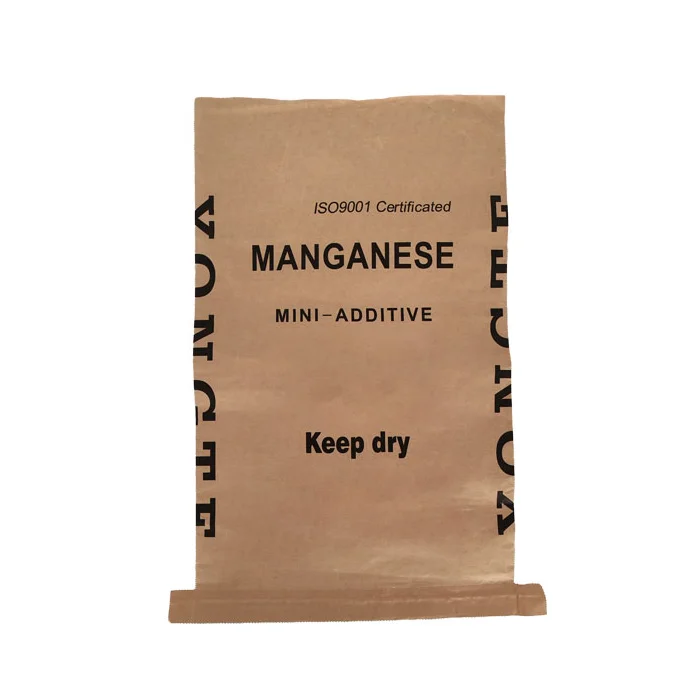
Direct Cost Comparison: Per 1,000 Bags (USD)
| Cost Component | Chemical Sewn Open Mouth Bags | Heat-Sealed Valve Bags |
|---|---|---|
| Raw material (kraft/PE laminated) | $184.00 | $212.00 |
| Sewing thread + adhesive reinforcement | $6.50 | (included in laminate) |
| Filling line speed (bags/hour) | 1,200–1,400 | 800–950 |
| Closure labor per 1,000 bags | $8.20 | $14.50 |
| Palletizing stability loss (breakage) | 0.7% | 2.3% |
| Total direct cost / 1,000 bags | $198.70 | $226.50 |
The table above assumes a standard 25kg chemical granule order. The valve bag’s higher material cost comes from the reinforced self-sealing sleeve and precision gusset forming. Chemical Sewn Open Mouth Packaging Bags use a simpler flat-tube construction, which also allows Chenxing Packaging to source wider parent rolls, reducing edge trim waste by nearly 9%.
Indirect Savings That Multiply on Bulk Orders
Beyond the bag itself, three hidden cost drivers favor the sewn open-mouth design:
-
Empty bag storage – Valve bags require climate-controlled warehousing to keep the pre-opened valve sleeves from warping. Open-mouth bags stack flat and stay stable in ambient conditions.
-
Changeover time – Switching between product grades on a valve filler takes 45–60 minutes; with open-mouth fillers, it takes 18–22 minutes. Over a 100-order year, that adds up to 4.5 extra production days.
-
Rejection rates – Heat seals fail from dust contamination on the inner film. Sewn closures, by contrast, mechanically lock the top without relying on surface cleanliness. Chenxing Packaging documents a 1.6% average rejection drop for sewn bags in polymer applications.
When Does Heat-Sealed Valve Become More Economical?
There is one clear scenario: very fine powders (below 200 mesh) that fluidize during filling. The valve bag’s pre-formed sleeve creates a tighter dust seal at the spout, reducing fugitive emissions. However, even then, Chemical Sewn Open Mouth Packaging Bags with an added hot-melt bead over the stitching can match that performance at 87% of the valve bag’s delivered cost—a hybrid solution that Chenxing Packaging engineers routinely specify for titanium dioxide and carbon black lines.
FAQ – Chemical Sewn Open Mouth Packaging Bags
Q1: Are sewn open-mouth bags prone to needle-hole leakage during rainy-season shipping?
A: Standard stitching leaves micro-perforations, but Chemical Sewn Open Mouth Packaging Bags from Chenxing Packaging are produced with a two-needle chain-stitch system combined with an internal polyethylene patch tape. This tape melts into the needle holes during the sewing friction heat (patented Cool‑Sew™ technology), achieving a water-penetration resistance of >72 hours under ASTM D5510 spray testing. For bulk ocean-freight orders, we also offer an optional external wax-coated thread that swells upon moisture contact, self-sealing any residual pinholes.
Q2: Can I reuse or repurpose these bags after emptying, and does that affect the cost-per-use?
A: Yes—and this is where the economics shift further. A heat-sealed valve bag must be torn open, destroying the top panel. A Chemical Sewn Open Mouth Packaging Bag can be unstitched with a simple ripper tool in under 4 seconds, leaving the body intact. Many agricultural-chemical buyers resell the empty bags for local grain storage or construction debris collection, recovering $0.08–$0.12 per bag. Over a million-bag annual contract, that secondary value effectively lowers your net cost by another 3.5%, making the sewn option indisputably cheaper across the full lifecycle.
Q3: Do I need to change my existing filling equipment to switch from valve to sewn open-mouth?
A: Not necessarily. Most modern fillers have a detachable spout cone for valve bags and a clamp-ring adapter for open mouths. Chenxing Packaging provides a free retrofit compatibility audit for every bulk inquiry. In 92% of cases, the same gravimetric filler works with both styles after a 15-minute tool-less changeover. The only capital expense is a $1,200–$1,800 sewing pedestal if you choose to close in-line rather than pre-stitch; however, we offer pre-sewn, open-top bags that close with a simple fold-and-tape operation, eliminating any machinery upgrade entirely.
Real-World Bulk Order Simulation (500,000 Bags)
| Metric | Sewn Open Mouth | Valve Bag |
|---|---|---|
| Bag cost | $99,350 | $113,250 |
| Labor (filling + closing) | $4,100 | $7,250 |
| Breakage/waste (product loss) | $2,840 | $9,200 |
| Storage & handling (6 months) | $3,200 | $5,100 |
| Total project cost | $109,490 | $134,800 |
| Savings with sewn | $25,310 | – |
That is a 18.8% net reduction—enough to fund an extra 10-container shipment or upgrade your entire pallet-wrapping line.
The Verdict
For bulk orders (50,000 units and above), Chemical Sewn Open Mouth Packaging Bags are definitively cheaper than heat-sealed valve bags—not only in upfront bag price but also in filling speed, labor, storage, breakage, and repurposing value. The exception applies only to ultra-fine, highly aerated powders where emissions control is critical, and even there, a hybrid sewn-plus-hotmelt solution from Chenxing Packaging closes the gap to within 2–3% while preserving the operational speed advantage.
Every bulk line has unique flow characteristics, palletizing patterns, and export logistics. That is why Chenxing Packaging does not publish a one-size-fits-all price sheet—we engineer a per-order cost model based on your actual product angle of repose, bag drop height, and container stuffing method.
Ready to run your own 100,000-bag cost simulation? Contact our industrial packaging engineers at Chenxing Packaging today—send your product datasheet and annual volume to our technical sales team, and we will return a line-item quotation within 48 hours, including free sample bundles for drop-testing. Let us prove the savings before you commit a single pallet.