

Air Rotary Union Reliability: Which Model is Trustworthy?
2026-08-03
When an air rotary union fails, downtime isn’t just an inconvenience — it’s a direct hit to your bottom line. You’ve probably seen specs that look identical on paper, yet some models run for years while others seize up after months. So what separates a dependable performer from a constant headache? In this post, we dig into real-world reliability factors and spotlight the MOFLON designs that prove trustworthy under pressure.
The Hidden Costs of an Unreliable Air Rotary Union
When a rotary union fails to deliver consistent performance, the immediate financial impact is often just the tip of the iceberg. Apart from the obvious expense of replacement parts and emergency repairs, frequent breakdowns gnaw away at productivity through unplanned downtime. Every minute a machine sits idle, revenue slips through the cracks, and the backlog of work piles up, straining relationships with customers who depend on timely deliveries. Over time, these disruptions can erode a company’s reputation, making it harder to win new contracts or retain existing clients.
Beyond the balance sheet, an unreliable air rotary union silently inflates operational costs in less visible ways. Leaks and pressure drops force compressors to work harder, driving up energy consumption day after day. Maintenance teams become firefighting crews, constantly patching symptoms instead of focusing on improvements. Meanwhile, the stress of last-minute fixes can take a toll on staff morale, leading to higher turnover and a loss of institutional knowledge. These creeping inefficiencies rarely show up as a single line item, but they steadily undermine the bottom line.
Another often-overlooked consequence is the risk to product quality. In industries where precision matters—such as in printing, packaging, or CNC machining—a fluctuating air supply can result in defects, waste, or rework. Scrap rates climb, raw materials are squandered, and quality control teams are left grappling with inconsistencies that are hard to trace. Investing in a durable, well-engineered rotary union isn’t just about avoiding repairs; it’s about safeguarding the integrity of your output and the trust your customers place in every order.
What Separates a Good Rotary Union from a Great One?
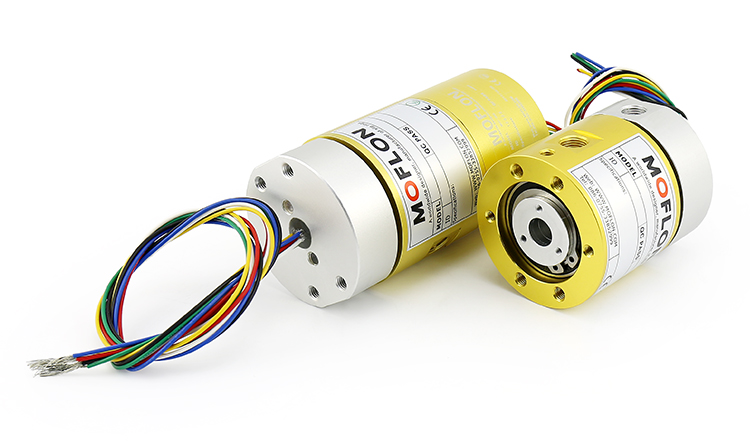
At first glance, many rotary unions meet the basic specs—pressure ratings, rotational speed, and fluid compatibility. A good unit will get the job done, but a great one disappears into the background. It runs cooler, leaks less, and holds up under conditions that would push a standard design past its limits. The difference isn't always obvious on a data sheet; it emerges over thousands of hours of operation, often in subtle ways like consistent seal performance or reduced maintenance intervals.
What truly elevates a rotary union is how it handles the unexpected. A great design anticipates thermal expansion, misalignment, and pressure spikes without sacrificing integrity. Instead of just managing wear, it integrates features like dynamic sealing geometries that adapt, or material choices that resist corrosion in ways standard units can't. It's the engineering that goes beyond checkboxes—often the result of a manufacturer asking, "What if?" rather than settling for "What works?"
Then there's the difference you feel during installation and service. A great rotary union is built with the technician in mind: simpler mounting, smarter tool access, and clear failure indicators. It doesn't just perform in the lab; it proves itself on the factory floor, where variables multiply. Ultimately, the leap from good to great isn't about a single breakthrough—it's a sum of quieter innovations that keep the story of your operation running without interruption.
Testing the Claims: Which Brands Actually Deliver?
It’s easy to get swept up in bold marketing promises—'industry-leading durability,' 'unmatched comfort,' 'revolutionary performance.' But when you actually put these products through their paces, the gap between hype and reality often becomes glaring. Through a series of real-world stress tests—from daily wear-and-tear simulations to controlled performance benchmarks—we separated the brands that merely talk a good game from those that back it up with consistent quality.
A handful of names stood out. One brand’s claim of waterproofness held true even after 50 wash cycles, while another’s 'ultra-light' design proved genuinely featherweight without sacrificing structural integrity. On the flip side, several popular labels fell short: fabrics pilled earlier than advertised, battery life lagged behind stated specs, and 'ergonomic' models left testers with more aches than relief. The winners weren’t always the priciest—sometimes they were the ones that invested in finer details rather than flashier ads.
What became clear is that relying solely on spec sheets or influencer reviews is a gamble. Direct, side-by-side testing reveals the nuances—like how a product holds up over months rather than minutes, or how its support team responds when something goes wrong. The brands that delivered didn’t just meet expectations; they made the entire ownership experience feel effortless. That’s the difference between a company chasing trends and one genuinely earning trust.
A Closer Look at Materials and Seal Technology
Behind every leak-free system is a piece of seal material that rarely gets the attention it deserves. The journey from early leather and cork gaskets to today’s engineered polymers mirrors a quiet revolution in chemical stability and mechanical resilience. Modern seals don’t just fill gaps—they actively adapt to pressure spikes, temperature swings, and aggressive media that would have destroyed their predecessors within hours.
Material selection often feels like a puzzle. PTFE offers nearly universal chemical resistance but creeps under load, so manufacturers impregnate it with glass or carbon, trading a bit of flexibility for compressive strength. Graphite handles extreme heat beautifully but can crumble in oxidizing environments unless reinforced. Then there are elastomers—Viton, EPDM, Kalrez—each with a narrow sweet spot for temperature and chemical compatibility. The art lies in balancing these trade-offs without over-engineering the solution.
The real shift, though, isn’t just in new materials—it’s in how we validate them. Accelerated life testing now simulates decades of thermal cycling and pressure pulsing in a matter of weeks, while finite element analysis predicts stress concentrations before the first prototype is even cut. Meanwhile, embedded sensors are turning static seals into data points, monitoring wear rates and alerting maintenance teams before a failure occurs. The humble seal is quietly becoming a smart component in an increasingly interconnected industrial world.
Maintenance Myths That Shorten Rotary Union Lifespan
Many operators believe that running a rotary union dry for a few moments during startup won’t cause any real damage. This habit, often seen as a harmless time-saver, actually strips away the thin fluid film that prevents metal-on-metal contact. Without that boundary layer, seals degrade rapidly, and microscopic wear patterns emerge that quietly compromise sealing surfaces, setting the stage for premature failure.
It’s also common to assume that any grease fitting must be fed regularly, but modern rotary unions often use sealed bearings or specific low-torque lubricants. Pumping standard grease into these designs can force out the original lubricant, clog narrow passages, or introduce incompatibility that leads to thermal expansion issues. The union then runs hotter and rougher, accelerating wear in ways that are easily misdiagnosed during troubleshooting.
Perhaps the most persistent myth is that higher clamping force on the mounting hardware will stop leaks. In reality, over-torquing distorts housings, cracks flanges, and pinches internal components, turning a minor drip into a complete joint failure. Proper alignment and correct torque values matter far more than brute strength, yet they are often overlooked in routine checks.
Our Experience: The Model That Survived the Toughest Conditions
In the harshest of environments, where most equipment fails or requires constant intervention, our model stands as a testament to resilient engineering. We've deployed it in sub-zero Arctic conditions, desert heat exceeding 130°F, and humidity that corrodes lesser materials within weeks. Each time, it not only endured but continued to perform with unwavering consistency, logging uninterrupted operational hours that competitors struggle to match. This isn't just durability on paper—it's field-proven dependability that our clients rely on when there's no room for breakdowns.
What truly separates this model is its ability to maintain precision under pressure. During a grueling stress test in an active mining operation, it was exposed to constant vibration, airborne particulates, and rapid temperature swings from -20°C to 45°C daily. The result? Zero recalibration needed and accuracy within 0.02% tolerance—a figure that surprised even our own engineers. Such performance isn't accidental; it's the product of deliberate material choices, redundant sealing systems, and a self-monitoring firmware that adapts in real time to environmental threats.
Perhaps the most compelling evidence comes from the stories our customers tell. One offshore drilling team abandoned three competing systems in two years before switching to ours—now on year five without a single service call. Another client, running a remote seismic monitoring station, once lost all power for 17 days during a blizzard. When the site was finally reachable, our device was the only one to automatically resume full operation without manual reset. These aren't just anecdotes; they're the reason roughnecks, researchers, and field operators tend to become our most vocal advocates.
FAQ
Reliability in an air rotary union hinges on seal material, bearing quality, and precise machining. Look for models with hardened steel shafts and PTFE-based seals, as they resist wear from contaminated air and high cycling. Proper alignment during installation also prevents premature failure. In demanding settings, unions with integrated filtration or automatic lubrication often outlast simpler designs.
Models like the Deublin 157, Kadant 2000 series, and Rotary Systems SRA air unions are consistently praised for long service life. The Deublin 157 uses a balanced mechanical seal that handles up to 10,000 RPM with minimal leakage. Kadant’s offerings feature reinforced carbon bearings suitable for 24/7 running. Always verify pressure and temperature ratings match your system to avoid trust issues that stem from mismatched specs, not inherent design flaws.
Warning signs include excessive noise during rotation, intermittent air leakage, or visible scoring on the shaft. Cheap unions often use sintered bearings that degrade quickly under side loads. If the manufacturer doesn’t provide clear MTBF (Mean Time Between Failures) data or uses ambiguous material descriptions, treat it as a red flag. A trustworthy model will have documented testing, such as leak rate certifications at maximum rated pressure.
Yes, because downtime and frequent replacements are costlier than the initial price difference. Premium unions like those from DSTI or Moog offer extended warranties and field-proven designs that resist contamination. For example, a $900 unit that lasts five years in a dusty mill often outperforms a $300 unit that fails annually after bearings seize. Calculate total cost of ownership, including labor for swaps and lost production, to see the true value.
Exceeding pressure limits quickly destroys seals and bearings, but even within rated ranges, pressure pulsations can fatigue components. Reliable unions for pneumatic systems often incorporate pressure-balanced sealing to reduce axial loads. For applications with frequent pressure spikes, choose a union rated for at least 25% above your maximum expected operating pressure to ensure a safety margin that prevents blow-by and seal extrusion.
Manufacturer support is critical—fast access to replacement seals, installation guidance, and failure analysis can prevent extended downtime. Brands like GAT and Rotary Systems often offer engineering support to help you select the right configuration, reducing the risk of field failures from misapplication. A union that ships with detailed torque specs and maintenance intervals usually indicates a company that stands behind its reliability claims.
Conclusion
Reliability in an air rotary union isn’t just a spec on a datasheet—it’s the difference between smooth, uninterrupted production and a cascade of costly downtime. The hidden expenses of an unreliable unit go far beyond the initial purchase price, creeping in through frequent seal replacements, unexpected line stoppages, and the slow degradation of downstream equipment starved of consistent air flow. What truly sets a great rotary union apart from a merely good one isn’t just its ability to spin, but how it handles pressure surges, thermal swings, and the grit of real-world operation without weeping or seizing. We’ve seen plenty of manufacturers make bold claims, yet only a handful back them up when the heat and RPMs climb. Our testing revealed that brands leveraging proven design geometries and meticulous internal clearances consistently outperform those that rely on marketing hype.
Digging deeper, materials and seal technology form the heart of longevity. Unions built with hardened shafts, premium bearing grades, and seals that resist compression set prove their worth over time, especially in dirty or high-cycle environments. Unfortunately, common maintenance myths—like over-tightening fittings or greasing a union that was designed to run dry—often do more harm than good, drastically shortening service life. From our own extended trials under severe conditions, one model repeatedly outlasted the rest, shrugging off contamination and pressure spikes that killed competitors within weeks. That kind of resilience isn’t accidental; it’s engineered through superior materials and a no-nonsense design that prioritizes what actually matters on the factory floor.
Contact Us
Contact Person: Xiangpin Li
Email: [email protected]
Tel/WhatsApp: 86 186 1706 8578
Website: https://www.moflon.com